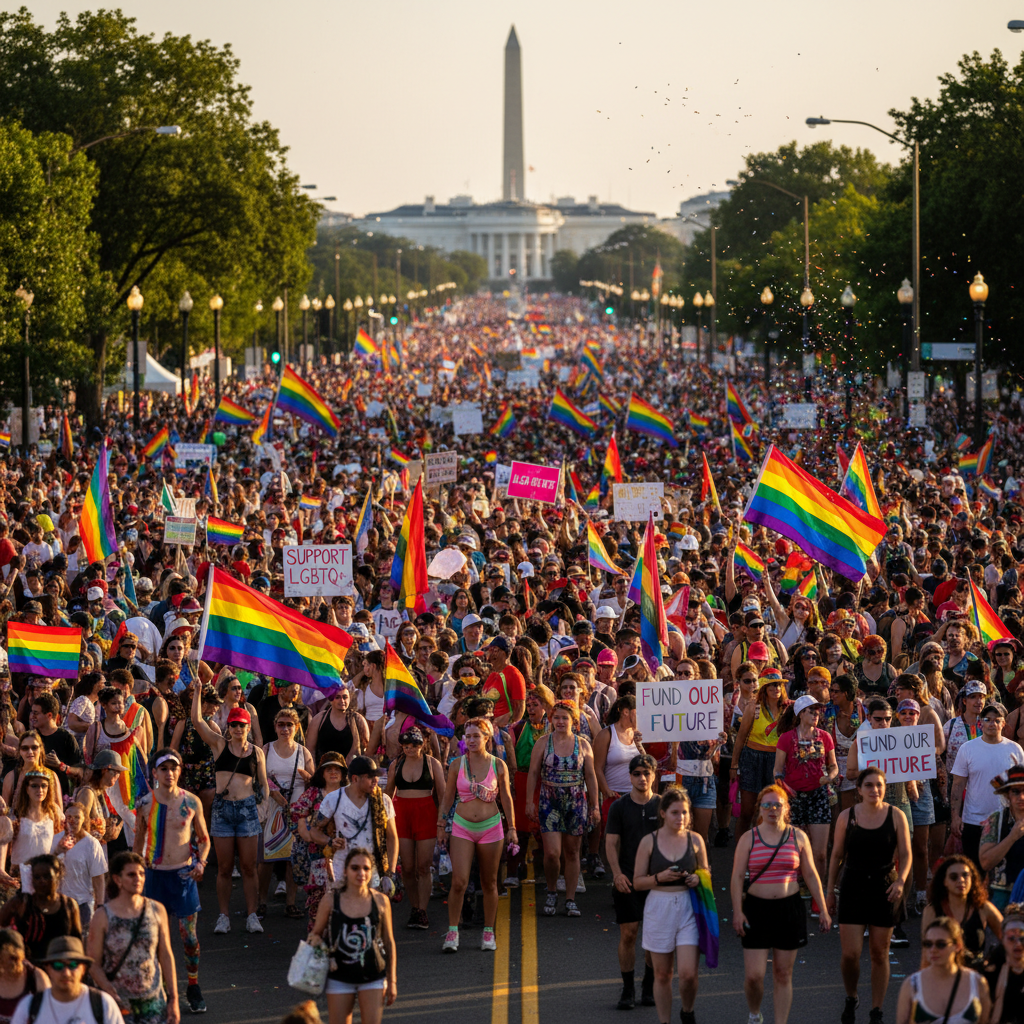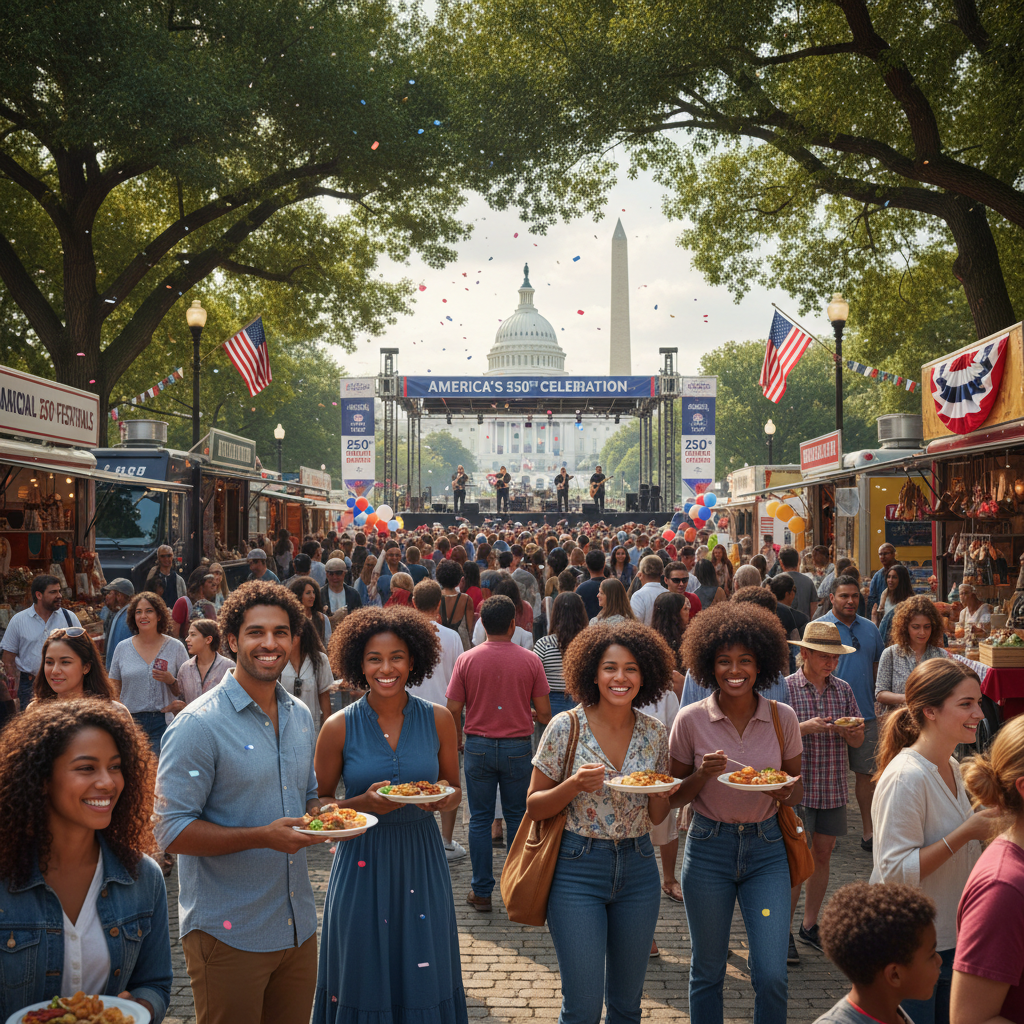
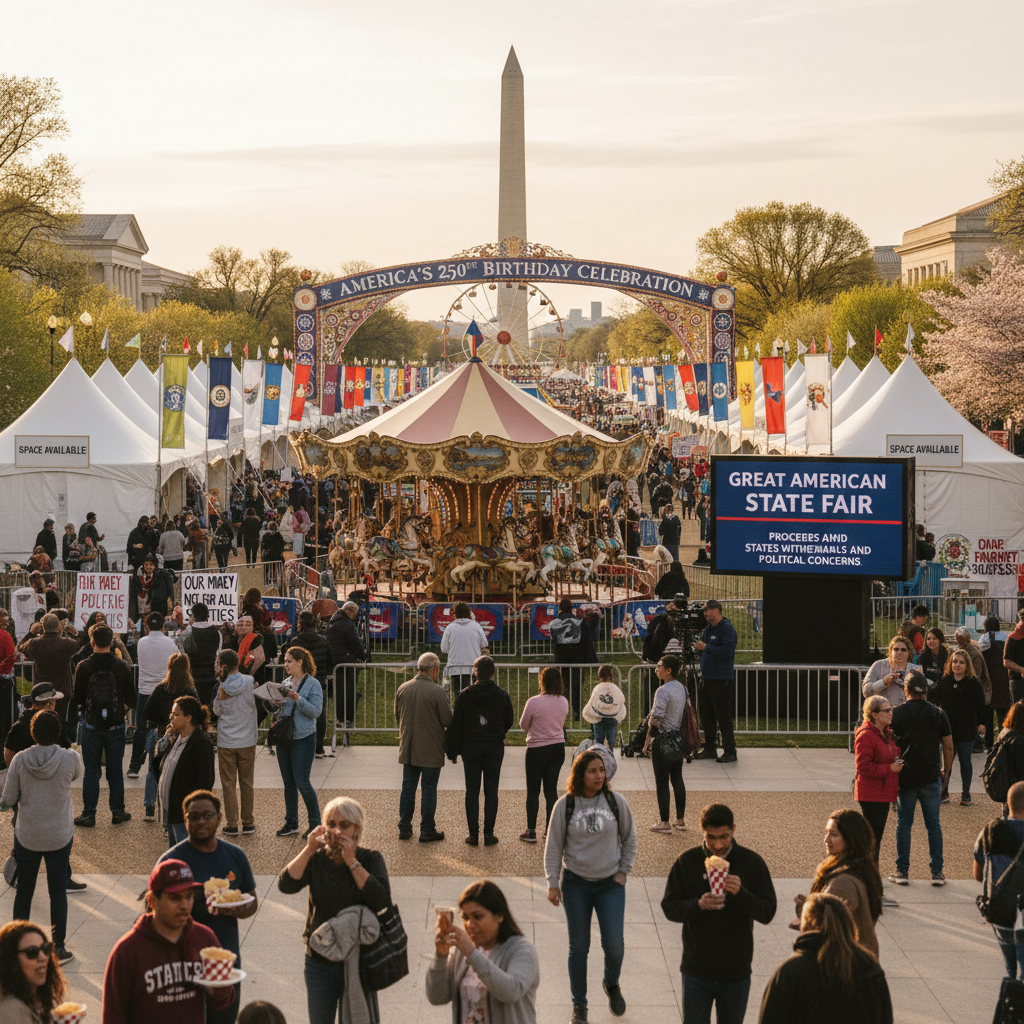
Washington, D.C. is set to host a 16-day spectacle on the National Mall, as preparations for the "Great American State Fair" are finalized ahead of the nation's 250th birthday celebration. Running from June 25 to July 10, the massive event promises to transform 10 city blocks into a traditional fairground complete with a Ferris wheel, state-themed pavilions, a daily rodeo, and military flyovers, all designed to commemorate the country's semiquincentennial.
Organized by Freedom250, a White House-backed campaign, the fair is billed as a "once-in-a-generation event" that will feature more than 150 exhibits. The official White House website for the celebration states that a "master-planned celebration will unfold along the National Mall from the Capitol to the Washington Monument, featuring vibrant pavilions representing every U.S. state and territory." These beaux-arts style tents are intended to showcase not only individual states but also national themes such as agriculture, arts, faith, and family.
Despite the grand vision, a growing number of state governments have formally declined to participate. Officials in Connecticut, Hawaii, Illinois, Maine, Massachusetts, North Carolina, Oregon, Rhode Island, and Washington have all confirmed they will not be sending official delegations or using state funds for the fair. For most, the decision came down to significant financial costs.
States cite high costs and political climate
The price tag for participation has been a primary deterrent. Cathryn Vaulman, a spokesperson for Connecticut Governor Ned Lamont, explained the financial burden placed on states. "The states were expected to fund and to staff a multi-week exhibit in Washington, D.C., which would entail getting staffers down to D.C., housing them, feeding them, and with the booths and everything … the estimated budget was at least $100,000," Vaulman said. She noted this funding would have been drawn from the state's own 250th-anniversary budget, leading to a "resource-based decision" to prioritize local celebrations.
Other states reported even higher cost projections. Sarah Hansen, director of the Maine Semiquincentennial Commission, said their estimates reached "half a million dollars or more," an amount deemed unfeasible. The state of Washington's decision was influenced by confusion over vague cost expectations, with figures reportedly ranging from $100,000 to nearly $1 million, according to Dallas Roberts, chief of staff for Lt. Gov. Denny Heck.
Beyond finances, some state leaders have voiced concerns over the event's political nature. The fair is one of several patriotic anniversary events in the capital this summer that have taken on a partisan tone, including a UFC fight night hosted by President Trump and a Fourth of July celebration he promoted as a political rally.
Organizers promise full representation
Freedom250 has pushed back against the criticisms, insisting that every U.S. state and territory will be represented. Rachel Reisner, a spokesperson for the campaign, stressed that representation could come from various sources, not just official state governments.
Whether represented by a governor's office, a tourism board, or a beloved state company or organization, every community will be celebrated, and every American will see themselves in this once-in-a-generation event.
Reisner clarified that the invitation was for states to showcase their culture and heritage in a way they saw fit, not a mandate for government spending. "Our ask was not your government entity must do this and give money; it was an invitation to the state to represent their culture, heritage, and landscape however they would like," she said. This has led to creative solutions, such as the Peoria Riverfront Museum stepping in to host an "Illinois-centric pavilion" with a hologram exhibit, all without using state funds.
The fair's kickoff event on Wednesday has also seen changes reflecting the political climate. Originally planned as a concert with a diverse lineup, many artists, including Martina McBride and Bret Michaels, have withdrawn. The event will now feature remarks by President Trump and performances by Lee Greenwood and Christopher Macchio, musicians who have previously appeared at Trump events. On his Truth Social platform, the president encouraged attendance, writing, "We are going to have fun, and celebrate America!"
Logistical hurdles for DC
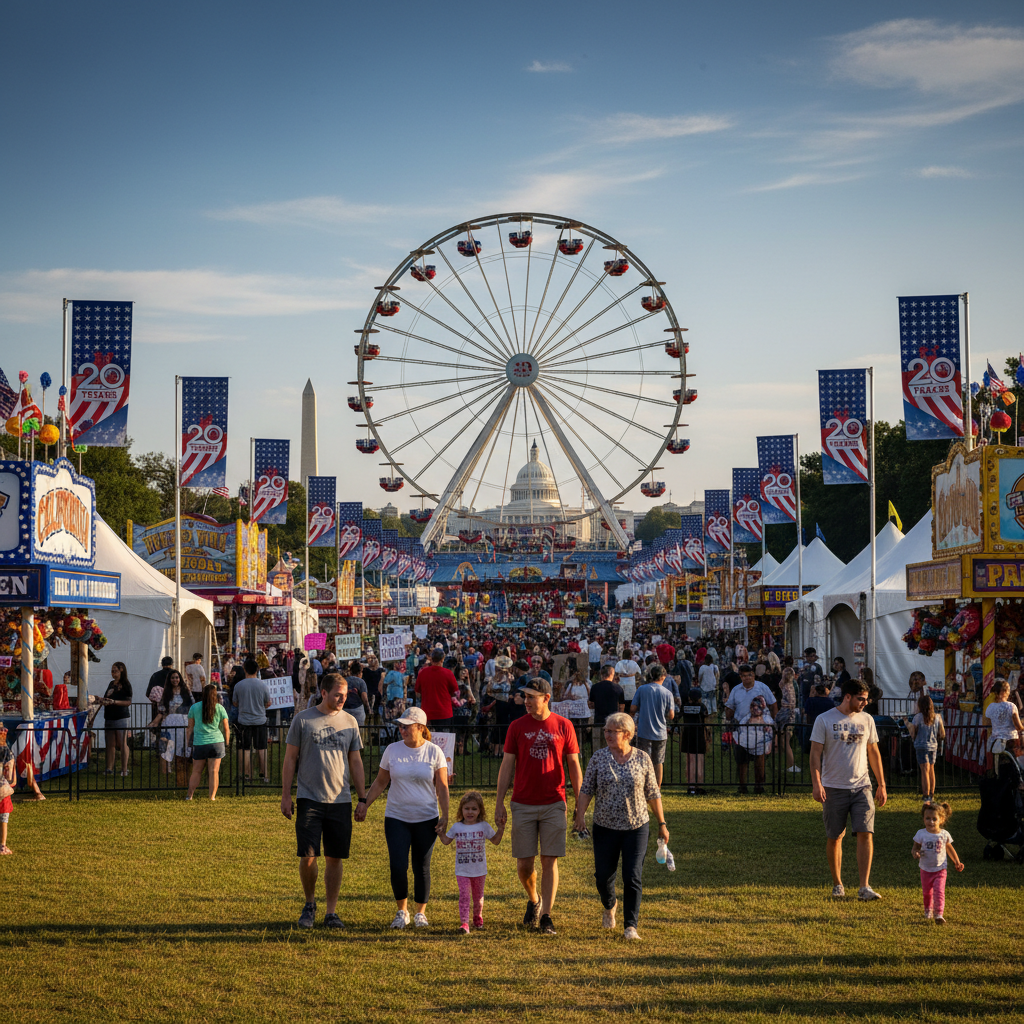
The 16-day extravaganza, which is free and open to the public, will feature interactive experiences like Michigan's mechanical milking cow and a re-creation of a Spanish fort from Florida. Major corporations and government agencies, from Meta and John Deere to NASA, will a have a presence. Each day has a theme, culminating in "The Next 250: Innovation" on its final day, July 10.
However, the large-scale event is causing significant disruption in the nation's capital. Large sections of the National Mall have been fenced off for construction for weeks. The Metropolitan Washington Airports Authority has also issued a warning for travelers using Reagan National Airport, advising that flights may be adjusted or delayed due to aerial displays associated with the celebrations. The most significant disruptions are expected on July 3 and 4, in the midst of the fair's run.