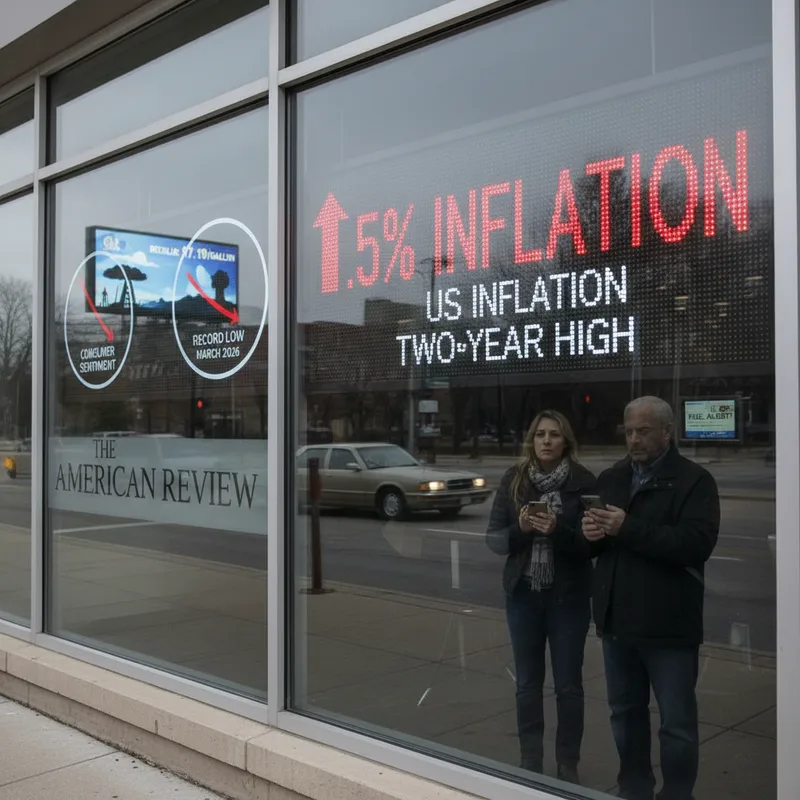
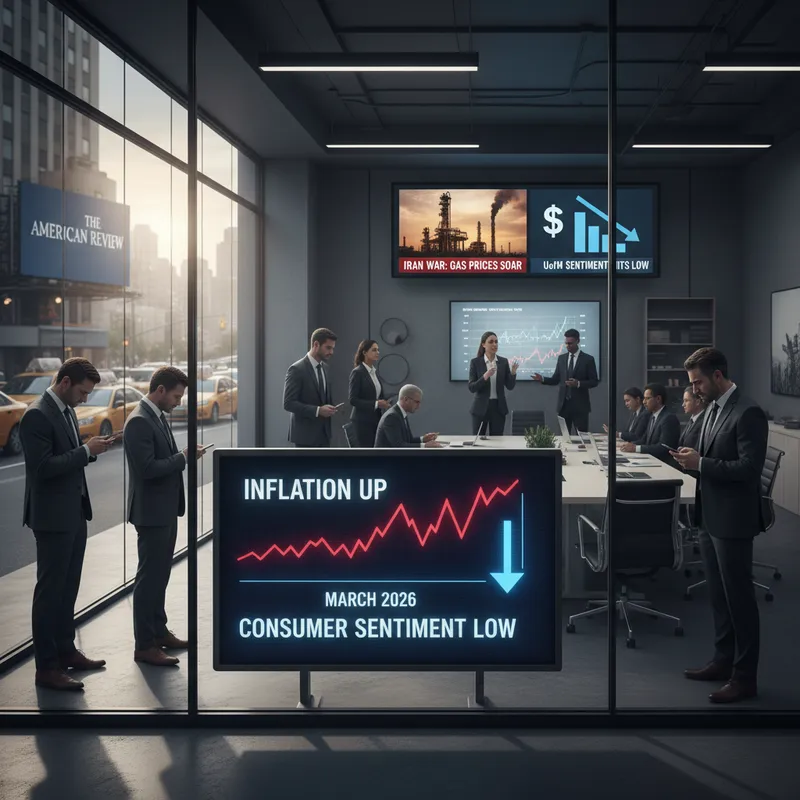
Americans were hit with a double dose of grim economic news Friday, as new data revealed that inflation in March jumped to its highest level in nearly two years, while consumer sentiment plunged to the lowest level ever recorded in the University of Michigan’s 74-year-old survey.
The U.S. Bureau of Labor Statistics reported that the Consumer Price Index (CPI), a key measure of inflation, rose 0.9% last month, marking the largest one-month increase since 2022. On an annual basis, inflation reached 3.3%, a level not seen since May 2024. The primary driver behind the surge was a dramatic spike in energy costs triggered by the war with Iran.
The conflict, which led to the closure of the critical Strait of Hormuz shipping lane, sent global oil prices soaring. This was felt directly at the pump, with the BLS reporting that gasoline prices spiked 21.2% and fuel oil prices rose 31% between February and March alone. The effects have rippled into related sectors, with airline ticket prices also climbing as jet fuel costs more than doubled since the war began.
However, the report offered a silver lining in the form of core inflation, which excludes volatile food and energy prices to give a clearer sense of underlying economic trends. Core CPI rose a more moderate 0.2% monthly and 2.6% annually. While these figures were better than many analysts predicted, they remain above the Federal Reserve's target inflation rate of 2%.
White House and Democrats trade blame
The White House sought to emphasize the positive aspects of the report. Kevin Hassett, President Trump’s top economic adviser, told Fox Business News that egg prices have fallen 44% over the last year. White House spokesperson Kush Desai acknowledged the conflict's impact, stating on social media that "President Trump has always been clear about short-term disruptions as a result of Operation Epic Fury, disruptions that the Administration has been diligently working to mitigate." Desai added that "prices of eggs, beef, prescription drugs, dairy, and other household essentials are falling or remain stable thanks to President Trump's policies."
Democrats, however, placed the blame for rising costs squarely on the administration. "Every family struggling to fill their gas tank or buy groceries knows exactly who is responsible," said Sen. Elizabeth Warren of Massachusetts.
A widespread decline in confidence
As prices surged, Americans' feelings about the economy soured dramatically. The University of Michigan’s closely watched Index of Consumer Sentiment fell from 53.3 in March to 47.6 in April, an 11% drop. This new figure is the lowest in the survey’s history, falling below the previous record low of 50 set in June 2022, another period of high inflation.
Assessments of personal finances declined about 11%, with consumers expressing a substantial increase in concerns over high prices and weaker asset values. Demographic groups across age, income and political party all posted setbacks in sentiment, as did every component of the index, reflecting the widespread nature of this month's fall.
The survey’s findings showed a broad-based decline in optimism. Americans' assessment of current economic conditions dropped by over 10% from the previous month and is down 16% from a year ago. Expectations for business conditions a year from now fell 20%. Consumers also anticipate higher inflation in the near future, with one-year inflation expectations jumping from 3.8% to 4.8%, the biggest monthly increase in a year.
Analysts expect second wave of price hikes
While the initial shock has been at the gas pump, economists warn that the full impact of the energy price surge has yet to be felt. They predict it is only a matter of time before higher energy costs ripple through the supply chain, increasing prices for a wide range of goods and services.
RSM Chief Economist Joseph Brusuelas said the energy shock will likely play out in two stages. "The first was in March, which showed up inside the energy complex, and the second will follow in April and beyond in the broader transportation, travel, food and service categories," he wrote in a research note. He cautioned that businesses and households should not expect any immediate relief.
Other analysts agreed that the situation will likely worsen before it improves. "It's painful in the near term," Michael Pearce, chief U.S. economist at Oxford Economics, told the Associated Press. "It's going to get more painful in April." However, Pearce expressed doubt that the inflationary wave will be long-lasting, suggesting "the conditions are much more like a short, sharp shock than what we saw in 2022."
Olu Sonola, head of U.S. economics at Fitch Ratings, told Bloomberg that price increases will be widespread and unavoidable. "You are going to see those surcharges start to appear in bills, and people pay attention to those," Sonola said. "It's not only airfares, it's not only luxury travel or this or that. It's about the things that you buy on a day-to-day basis really moving higher."
Taxes and government policy fuel discontent
Compounding the economic gloom is a growing dissatisfaction with taxes. A recent Gallup poll conducted in March found that nearly six in 10 Americans believe the amount they pay in federal income tax is "too high." This sentiment is shared across party lines, with 64% of independents, 60% of Republicans, and 49% of Democrats feeling overburdened.
Public perception of tax fairness has eroded since the initial positive feelings following the 2017 tax cuts under President Trump. The latest tax cuts, passed as part of last summer's "One Big Beautiful Bill Act," have not yet improved Americans' views. According to Gallup, 49% of Americans now believe their tax burden is unfair. The general economic malaise has already been hurting Main Street, with a recent report on small business confidence showing a dip amid inflation concerns. Similar issues have surfaced in Los Angeles schools, where 70,000 employees are bracing for a massive strike.
National debt provides grim backdrop
The current economic pressures are unfolding against a backdrop of long-term fiscal challenges. The federal government has operated at a deficit every year since 2001, causing the national debt to swell to over $33 trillion. This represents 120% of the country's entire gross domestic product (GDP), a significant increase from previous decades that was accelerated by massive government spending during the 2008 financial crisis and the COVID-19 pandemic.
This staggering debt load contributes to the very political uncertainty and budget battles in Washington that often leave consumers and investors on edge. While a two-week ceasefire in the Iran war has raised hopes that gas prices might fall, the conflict is not resolved, and the supply chain disruptions it caused will take time to mend.
For now, Americans are left grappling with higher prices and a deeply pessimistic outlook. As economist Joseph Brusuelas warned, "The price shock will be with all of us for the rest of the year."