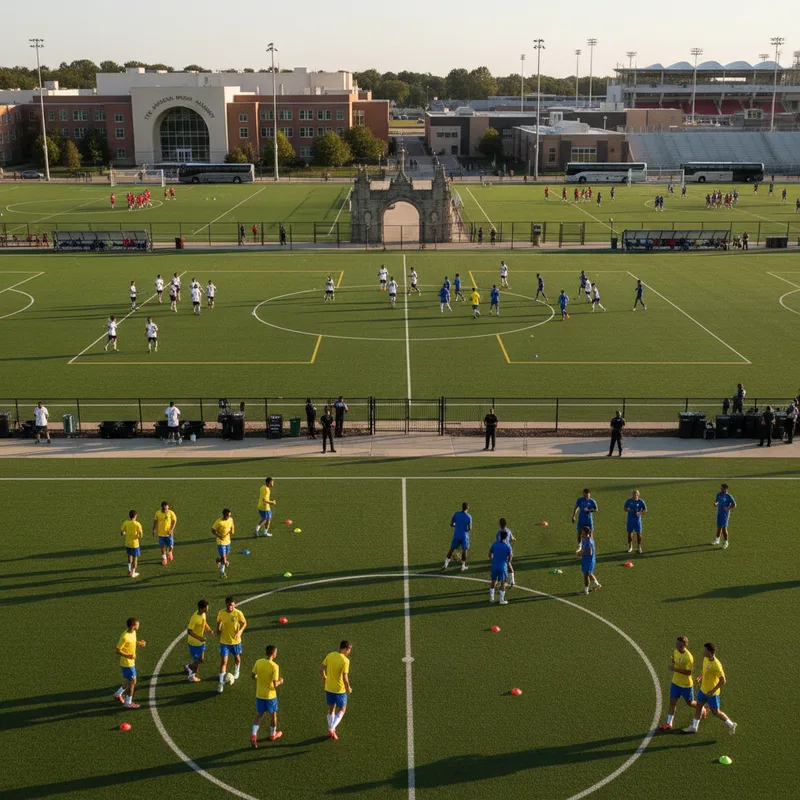
As the 2026 FIFA World Cup kicks off this month across North America, some of the world's biggest soccer stars are trading state-of-the-art professional complexes for the manicured grounds of American high schools. In a surprising move, four top-ranked nations. Spain, Morocco, Croatia, and Switzerland. have selected elite private schools in Tennessee, New Jersey, Virginia, and California as their official tournament base camps.
Each of the record 48 teams in the tournament is assigned a dedicated training facility and partner hotel. While many opted for professional soccer clubs or university campuses, these four teams chose a different path. For the next few weeks, Spain's Lamine Yamal will be training in Chattanooga, Croatia's Luka Modrić will be in Alexandria, and Switzerland's Granit Xhaka will be based in San Diego, all preparing for the world's biggest sporting event on high school fields.
The decision stems from a desire for privacy and access to premier facilities, which these institutions have cultivated as a lucrative side business. The schools, in turn, gain a significant revenue boost and immense pride. FIFA's rental fees, though not fully disclosed, are estimated to be in the hundreds of thousands of dollars for each school, providing a substantial financial injection.
A strategic choice
The selection process was a formal one, with schools submitting proposals to FIFA to be included in a brochure of potential sites. After the World Cup draw in Washington, D.C., last December revealed the match locations, national federations began touring the pre-vetted locations. For some teams, the appeal of a secluded, high-caliber environment outweighed the inconvenience of being located far from their game-day stadiums, requiring hundreds of miles of extra travel.
These schools are not random choices; they are known within the international soccer community for their ability to host high-profile teams. All four have previously welcomed professional clubs or national squads, building a reputation for discretion and quality. Teams are required to hold a community engagement day, offering a rare opportunity for local residents and students to interact with global soccer icons.
Spain finds a home in Tennessee
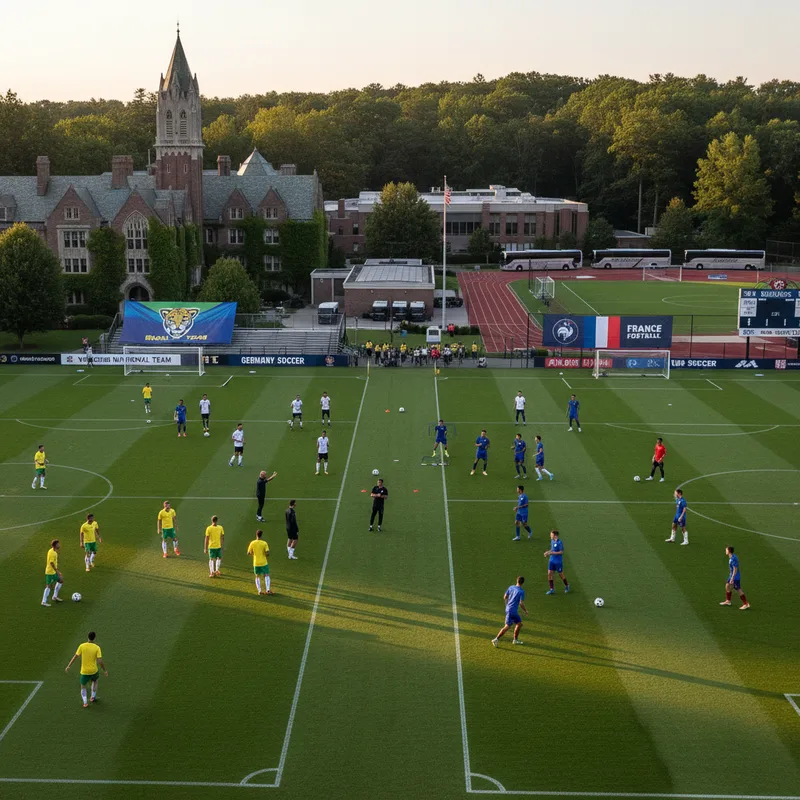
The Baylor School in Chattanooga, Tennessee, is hosting the FIFA-ranked No. 2 Spanish national team. The idea was first proposed three years ago by Chattanooga Mayor Tim Kelly, a Baylor alum and founder of the local soccer club, Chattanooga FC. Chris Angel, the school's head of school, said the institution's athletic pedigree and secluded campus, set against the Tennessee River, made it an ideal choice.
A lot of countries came in and looked, and there was a lot of interest, but when Spain wanted to be here, that narrowed it down quickly.
New Jersey's 1994 legacy continues
This year, Pingry is hosting the world's No. 8 team, Morocco. Carl Frye, the school’s director of auxiliary programs, said hosting teams is a major part of the school's identity and a significant source of revenue, bringing in several hundred thousand dollars each summer. “We’re just a school, a K–12 private school, but this is a big part of who we are and our history,” Frye said. After a flurry of tours from other top nations following the December draw, Morocco ultimately selected the historic site.
San Diego's 'crazy' idea pays off
When Adam Benmoise became the director of auxiliary programs at the San Diego Jewish Academy (SDJA) in 2022, he told his bosses he wanted to host a World Cup team. “They thought I was crazy,” he recalled. But after successfully hosting teams like the U.S. men’s national team and investing in professional-grade equipment and infrastructure, his vision became a reality.
A slice of the World Cup for the DC area
In Alexandria, Virginia, the nearly 200-year-old Episcopal High School is welcoming Croatia, a team that finished second in the 2018 World Cup and third in 2022. Though the nation's capital is not a host city for matches this year, the school's involvement brings the tournament's spirit to the region. This has a special resonance for locals like Dan O’Neil, the school’s director of auxiliary programs, who remembers watching one of the most famous goals in tournament history at RFK Stadium in Washington, D.C., during the 1994 World Cup.
Episcopal's 130-acre closed campus offered the privacy and top-quality Bermuda grass fields that were paramount for the touring national teams. “There’s a long history of international students here back to the 1800s, so being part of a world event like this is really the driving force,” O’Neil said. He added that the school's role is a point of local pride, especially given the city's exclusion from the official host list.