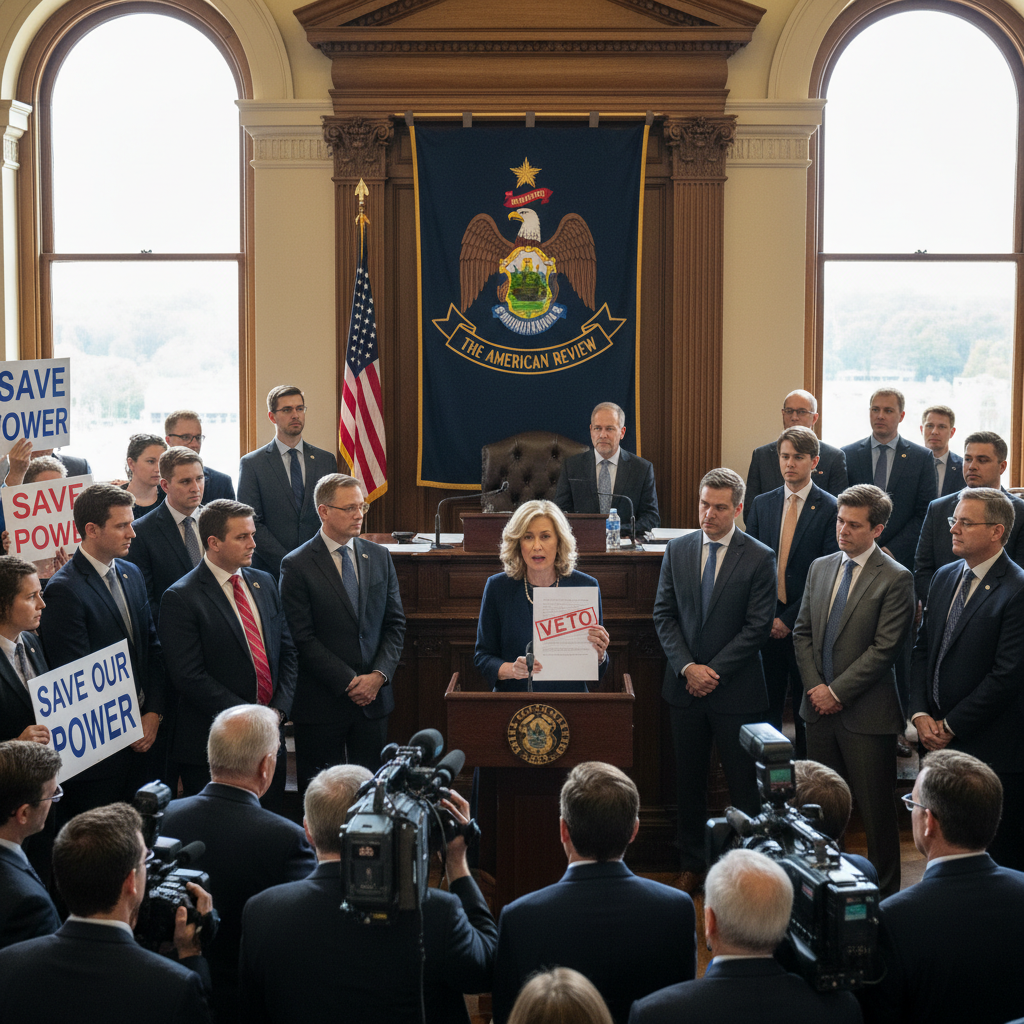
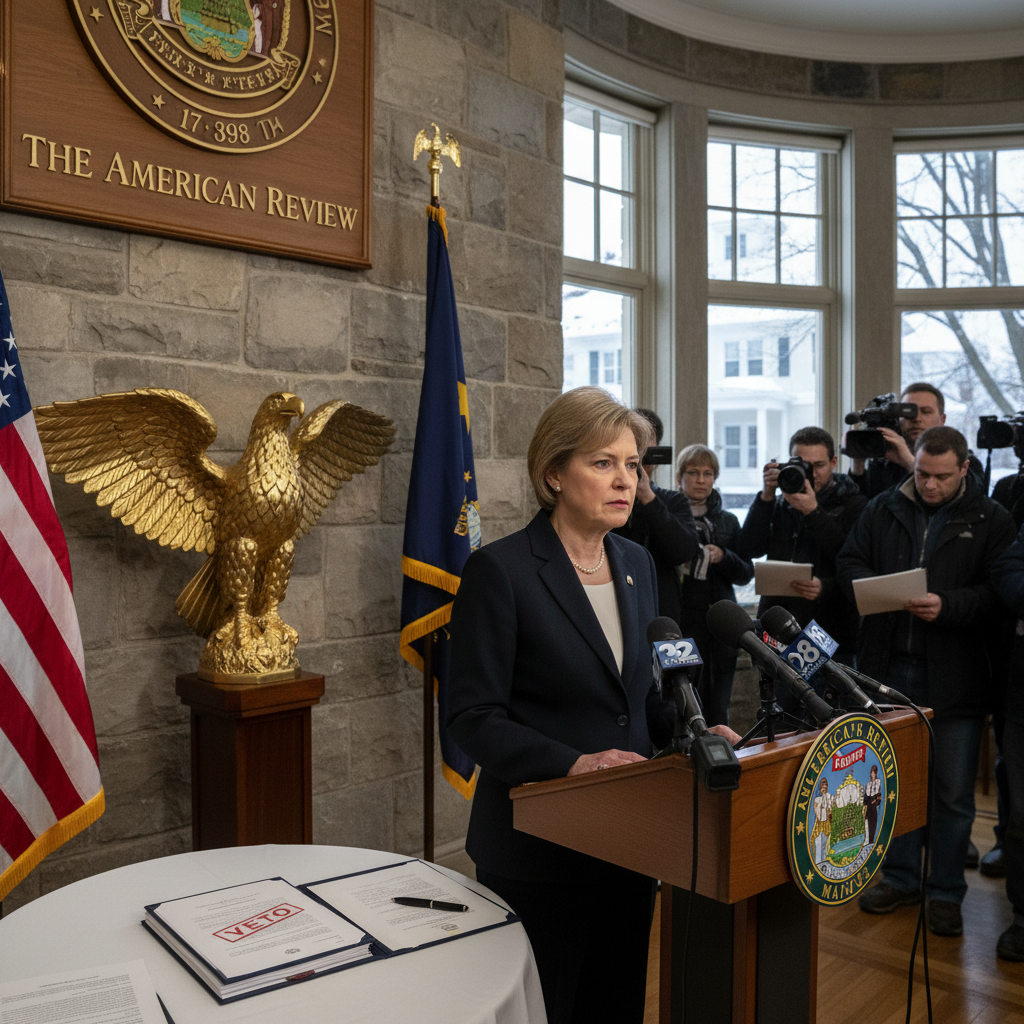
Maine Gov. Janet Mills on Friday vetoed a closely watched bill that would have established the nation’s first statewide moratorium on the development of large data centers. The legislation, which passed with bipartisan support, sought to pause new projects over 10,000 square feet to allow state regulators time to study the immense strain these facilities place on energy grids and water supplies.
In her veto letter, the Democratic governor acknowledged the significant environmental concerns surrounding data centers but argued that a blanket moratorium was the wrong approach. Mills stated it would send a message that Maine is “closed for business” to a growing industry and could stifle economic investment. She called for a “more nuanced, balanced solution” that addresses the challenges without completely shutting down development.
The bill’s rejection highlights a growing national tension between the voracious energy and water demands of the digital age and the capacity of local infrastructure to support them. As artificial intelligence and cloud computing spur an explosion in data center construction, states across the country are grappling with how to manage their growth.
A 'timeout' to study the impacts
Supporters of the moratorium argued it was a necessary “timeout” to understand the full implications of the power-hungry facilities. The bill's sponsor, Democratic Sen. Matthea Daughtry of Brunswick, emphasized the need for a proactive strategy before the state becomes overwhelmed. The legislation would have paused approvals for larger data centers until the state’s Public Utilities Commission and Department of Environmental Protection could develop comprehensive regulations.
Data centers, which house the servers that power everything from social media to complex AI models, are notoriously resource-intensive. Their servers generate immense heat and require constant cooling, typically through massive air conditioning systems that consume vast amounts of electricity and, in some cases, water. According to the International Energy Agency, the world's data centers consumed more electricity in 2022 than the entire country of Australia, and their demand is projected to double by 2026.
The noise from their industrial-scale cooling fans has also become a major point of contention in communities where they are located, turning a zoning issue into a quality-of-life problem for nearby residents.
A nationwide debate heats up
Maine is not alone in this struggle. The debate is playing out in suburbs and rural areas across the United States. In Virginia’s Loudoun County, known as “Data Center Alley,” officials have been forced to re-evaluate zoning and tax incentives after decades of welcoming the industry. Residents there have voiced increasing frustration over the constant hum of cooling systems and the proliferation of massive, windowless buildings connected by webs of high-voltage transmission lines. Similarly, Bethel emerges as Maine's unlikely cannabis capital.
Similar conflicts are emerging in states like Georgia, Illinois, and Kansas, which have also offered significant tax breaks to attract data center investment. Lawmakers and local officials in these states are beginning to question whether the economic benefits, such as tax revenue and a limited number of high-tech jobs, outweigh the environmental and social costs.
Proponents of the industry argue these facilities are essential infrastructure for the 21st-century economy. They point to the critical role data centers play in supporting remote work, e-commerce, and the development of breakthrough technologies. The U.S. Chamber of Commerce has actively lobbied against moratoriums, warning they could hinder technological progress and weaken the nation’s competitive edge.
The search for a balanced solution
In her veto, Gov. Mills directed state agencies to begin a stakeholder process to collaborate on rules that could govern future data center development. She suggested that this approach could lead to smarter siting of facilities, encourage the use of renewable energy, and promote innovative cooling technologies that reduce water and power consumption.
This directive aligns with a growing movement to develop so-called “green” data centers. These facilities often incorporate energy-efficient designs, use recycled water for cooling, or are located in colder climates to reduce the need for artificial cooling. Some tech giants are also investing in their own renewable energy projects, like solar and wind farms, to offset the massive power draw of their server farms.
While the legislative effort for a statewide pause in Maine has stalled, the conversation it started is far from over. The veto ensures that for now, decisions on data center proposals will remain in the hands of local municipalities, which often lack the resources and expertise to assess the long-term impacts of these complex industrial sites. The issue is expected to return to the state legislature, reflecting a national search for a sustainable path forward in the age of big data.