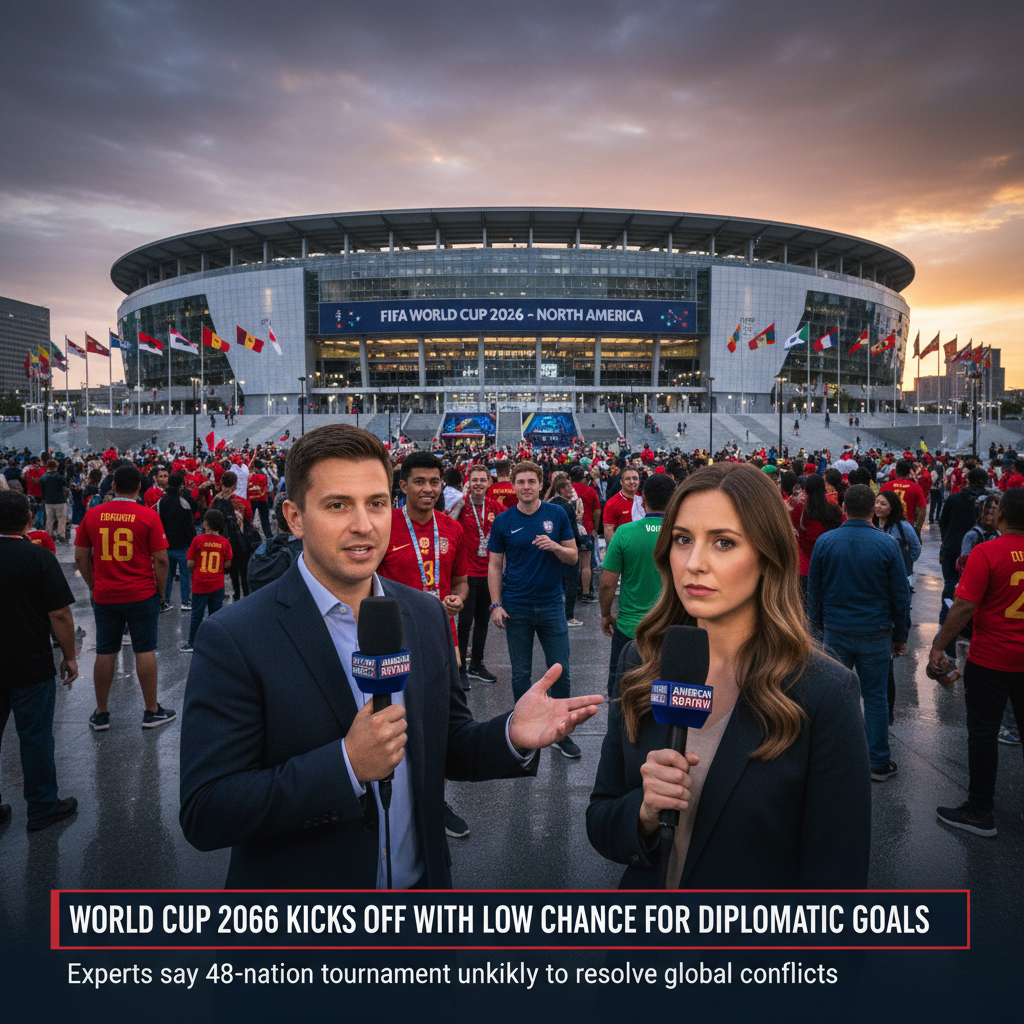
The world's attention turns to North America this week as the 2026 FIFA World Cup kicks off, bringing an expanded field of 48 nations together for the globe's most-watched sporting event. As athletes adorned in national colors compete, the question arises: in a world fractured by conflict, can the goodwill of sport provide a path to diplomacy?
Mega sporting events like the World Cup and the Olympics have long been intertwined with global affairs. The ideal, often mandated by the spirit of the games, is for nations to set aside their disputes for the duration of the competition. Yet, according to a new analysis from the Center for Strategic and International Studies (CSIS), the prospect of the 2026 tournament producing any significant diplomatic breakthroughs remains slim.
Analysts Victor Cha and Andy Lim of CSIS note that while sport can sometimes open doors for dialogue in ways traditional diplomacy cannot, historical precedent shows mixed results. The phenomenon of "ping-pong diplomacy" in the early 1970s, for instance, helped pave the way for a historic opening of relations between the United States and communist China. However, sport has also been used to amplify geopolitical tensions, most notably during the Cold War.
A history of politics on the field
The intersection of sports and conflict reached a peak during the Cold War era. The Carter administration's decision to boycott the 1980 Moscow Olympics over the Soviet invasion of Afghanistan triggered a retaliatory boycott by the Soviet Union for the 1984 Los Angeles Olympics. It was a clear demonstration of sport as a front for political protest, ironically defined by the refusal to compete.
Despite these high-profile examples, a comprehensive look at World Cup history reveals that it is exceptionally rare for direct adversaries to even participate in the same tournament, let alone face each other on the pitch. The CSIS study found that across 23 World Cups, the percentage of potential matchups between teams from nations in active conflict has never surpassed 1.1 percent. The highest proportion occurred during the 1982 World Cup, coinciding with the Falklands War.
In the few instances where the luck of the draw has pitted antagonists against each other, the matches have become saturated with political symbolism. Only four such games have occurred in World Cup history. The 1974 match between East and West Germany was the only time the two nations would compete before German unification, ending in a shocking upset by East Germany. In 1986, the quarterfinal between Argentina and England, just four years after the Falklands War, became a deeply symbolic event for both nations and ignited a fierce rivalry that persists today. Some elite U.S. high schools have even had the opportunity to host international teams for training, giving young Americans a close-up view of the global competition.
More recently, the 1998 World Cup match between the United States and Iran offered a brief moment of peace. In a gesture of goodwill, the Iranian team presented their American counterparts with white roses, a Persian symbol of peace, and the two teams took a combined photo before the game. When they met again in 2022, the match became a stage for political expression, as members of the Iranian team stood silent during their national anthem in solidarity with anti-regime protestors back home.
A low-conflict field in 2026
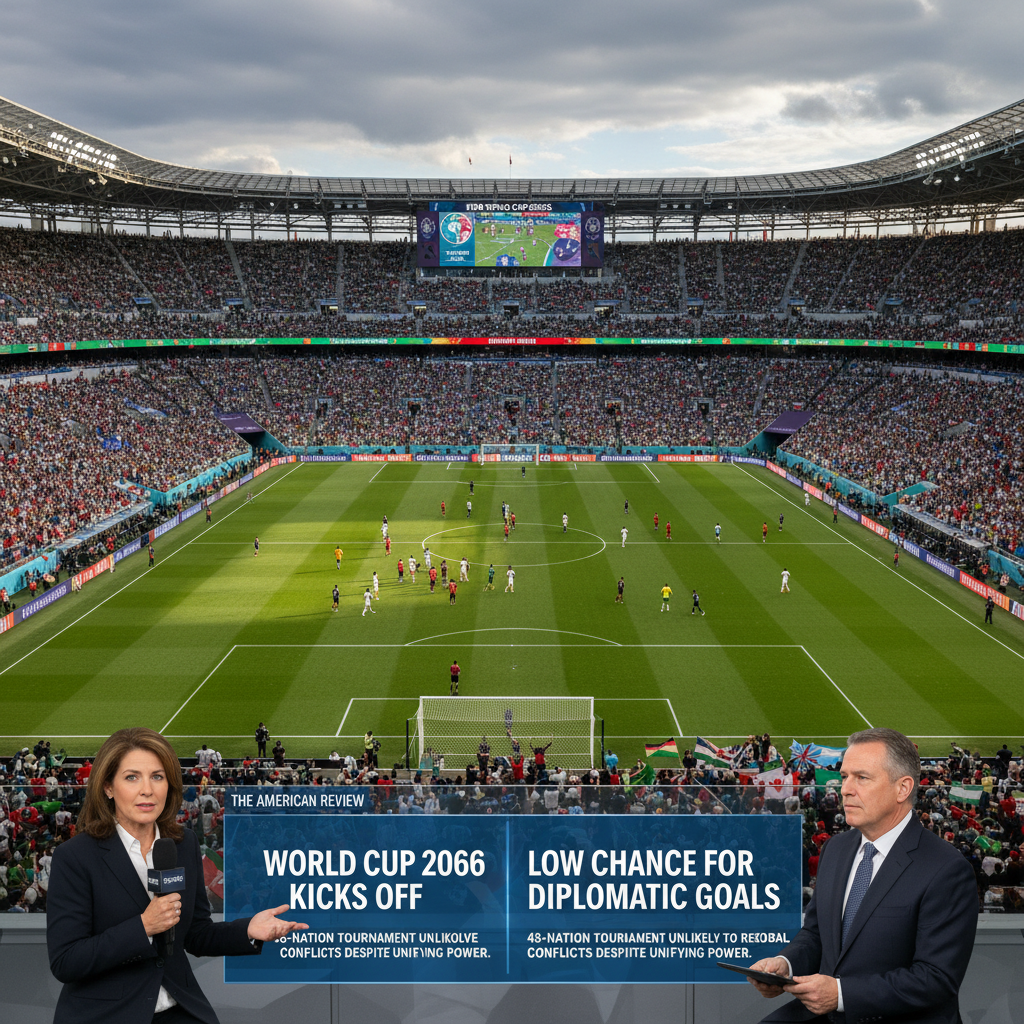
Even with active wars in Europe and the Middle East, the 2026 tournament is considered a low-conflict field. According to the CSIS data, potential pairings of adversaries account for just 0.35 percent of all possible matchups in the 48-team tournament This is despite 2026 having more adversary pairs, four, than any previous World Cup.
The potential adversarial matchups are Iran vs. the United States, Iran vs. Saudi Arabia, Iran vs. Qatar, and Morocco vs. Algeria. However, all four pairs were drawn into different groups, meaning they cannot meet before the knockout rounds and will likely not play each other at all.
The study's authors note that the small number of adversarial pairings says more about who qualifies for the tournament based on footballing strength than it does about the state of world peace. The world has not grown calmer, they argue, but the World Cup field rarely reflects its most intense conflicts. The growing popularity of the sport in North America is evident, with cities like Brampton hosting soccer celebrations ahead of the games.
Politics has already made its presence felt before the first whistle. Iran's soccer federation has reportedly complained to FIFA that its fan ticket allocation was pulled for its U.S. matches and that Washington had rescinded visas for some of its officials. Relatedly, in an effort to manage expenses, Toronto sells World Cup tickets to offset hosting costs.
Peace through prohibition
One of the key reasons for the low number of on-field confrontations is the use of sanctions that ban certain nations from competing. The CSIS report highlights that the potential for conflict has often been neutralized by disinviting aggressor nations from the competition. For example, the Soviet Union was banned in 1974, Yugoslavia in 1994, and Russia has been barred from the 2026 tournament.
This contrasts with events like the 1956 Melbourne Olympics, where the semifinal water polo match between the Soviet Union and Hungary occurred just weeks after the Soviet invasion of Hungary. The violent encounter became infamously known as the "blood in the water match," illustrating what can happen when bitter rivals do compete.
Ultimately, the analysis concludes that while the World Cup will provide memorable moments and generate global goodwill, it is unlikely to serve as a catalyst for peace on its own. Cha and Lim argue that sport can only facilitate a diplomatic breakthrough if there is already a political will for peace and quiet diplomacy is already happening behind the scenes. Programs at educational institutions, like those offered at San Diego Unified, can help foster the cross-cultural understanding that events like the World Cup champion.
The case of ping-pong diplomacy serves as a key example. it helped accelerate President Nixon's diplomatic efforts with China because the groundwork had already been laid and it demonstrated that the American public would be receptive. In contrast, U.S.-Iran wrestling exhibitions have created temporary goodwill but have failed to resolve deep-seated political tensions.
Without substantive efforts from political leaders on both sides of a conflict, the report concludes, it is highly improbable that they will find a golden-goal diplomatic breakthrough simply because of a soccer match. The official FIFA website has the full schedule and list of host cities across the United States, Mexico, and Canada.