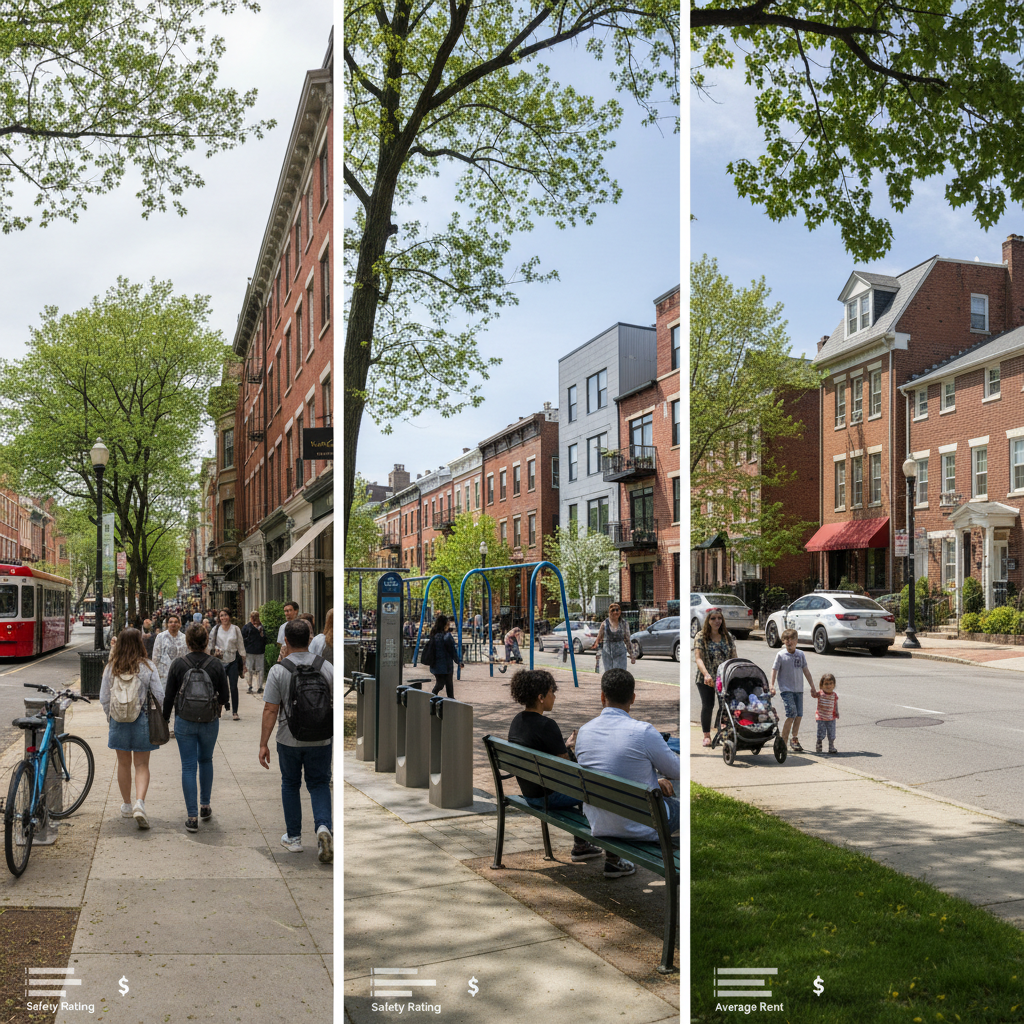
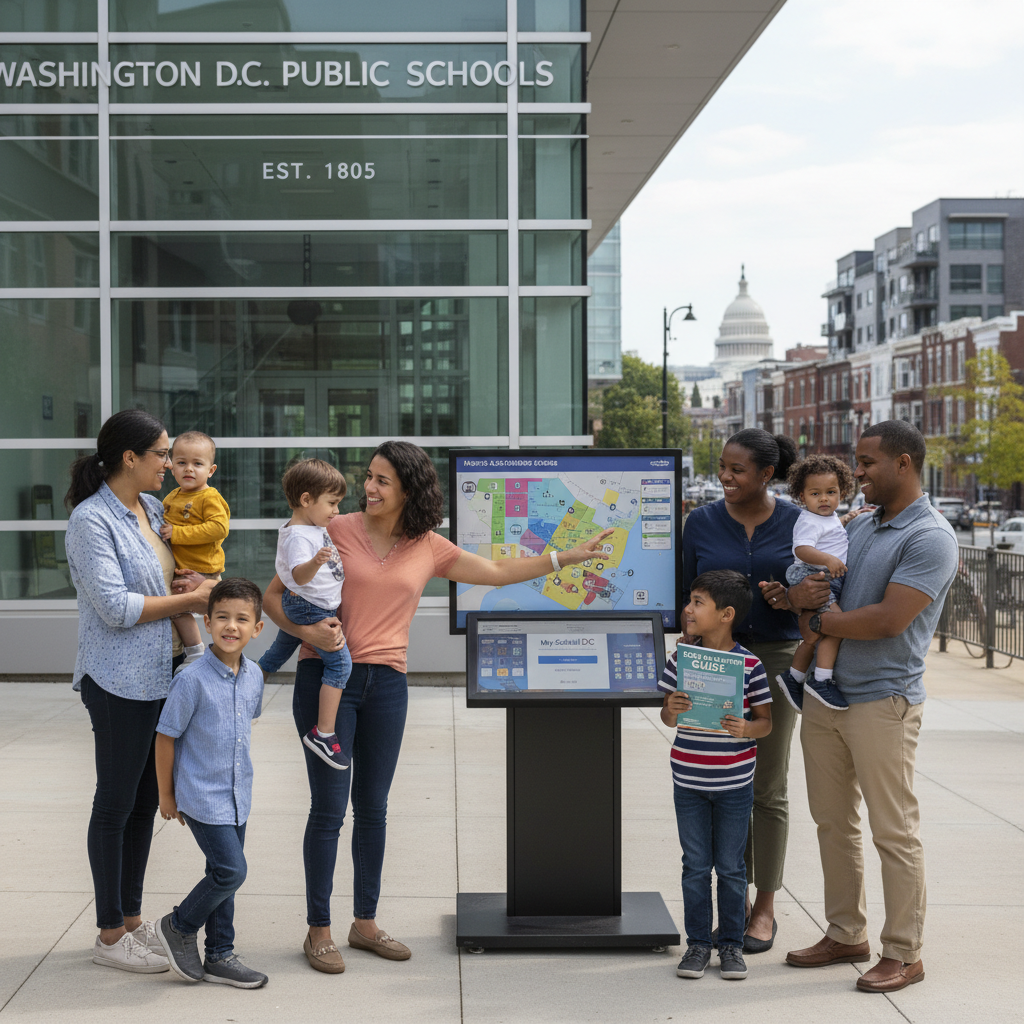
Washington, D.C. has one of the most choice-heavy public school landscapes in the country. Families can enroll in their in-boundary DCPS neighborhood school, apply out-of-boundary to other DCPS campuses, or try for a seat at a public charter, all while juggling deadlines, preferences, and waitlists through a single portal: My School DC.
If you are new to the District, that mix can feel like a second job. But once you understand the basic map, boundary rights, feeder patterns, and the common lottery, you can build a realistic list for your child and a timeline that keeps you out of last-minute panic.
This guide focuses on the 2026-2027 school year, with local, on-the-ground tips and the official tools D.C. families use every season.
How DC public schools work in 2026-2027 (DCPS vs public charter)
D.C. has two publicly funded sectors: District of Columbia Public Schools (DCPS) and DC public charter schools. Both are tuition-free for District residents, but they operate differently.
- DCPS neighborhood schools: Every address in D.C. is assigned an in-boundary elementary school and a DCPS feeder pattern for middle and high school. If your child is enrolling in their in-boundary DCPS school at kindergarten or above, you typically enroll directly with the school, no lottery required.
- DCPS out-of-boundary and citywide schools: Many DCPS schools accept out-of-boundary applicants through the My School DC lottery. Some DCPS high schools and programs are application-based, sometimes with additional requirements.
- Public charter schools: Charters are open to all D.C. residents citywide and do not have neighborhood boundaries. Most seats are filled through the My School DC lottery.
Start with two official map tools: the DCPS boundary lookup at enrolldcps.dc.gov and the My School DC school finder at find.myschooldc.org. When you enter your address, you will see your in-boundary DCPS school, plus nearby options and commuting distances.
Housing and school planning are intertwined in D.C., particularly west of Rock Creek and in parts of Capitol Hill. If you are evaluating a move with schools in mind, our neighborhood rundown in The ultimate guide to Washington, D.C. neighborhoods (2026) is a helpful companion, and buyers can find local support through resources like DC homebuyer club marks decade of empowering local residents.
How the My School DC lottery works (step-by-step)
My School DC is the District’s common application and common lottery for participating DCPS schools and most public charters, typically for PK3 through grade 12. You can read the city’s FAQ at myschooldc.org/faq and apply at apply.myschooldc.dc.gov.
In general, the process works like this:
- Create an account on the application site and add your child’s information.
- Build a ranked list of up to 12 schools. Ranking matters because the algorithm attempts to match your child to the highest-ranked school possible.
- Submit before the deadline. Deadlines vary by grade band, so verify each season.
- Receive results on match day, either an offer or waitlist positions.
- Enroll by the deadline at the school that offered you a seat to secure it, then decide whether to stay on other waitlists.
D.C. parents often underestimate the power of a longer, thoughtfully ranked list. If you only list two highly sought-after programs, you are effectively narrowing your odds. A realistic list mixes reach schools, good-fit schools, and a true fallback you would accept.
If you get an offer, act quickly. Enrollment deadlines can be short, and schools expect documentation for residency, age, and immunizations.
For a plain-language overview of the system, this local explainer from 51st is widely shared among families: Everything you need to know about D.C.’s school lottery.
DC School boundaries and feeder patterns, what “in-boundary” really means
“In-boundary” means your address gives your child the right to enroll at that DCPS neighborhood school, space permitting, following DCPS rules for enrollment. Your elementary assignment typically comes with a feeder pattern to a DCPS middle school and high school.
Families moving within the city should confirm boundaries before signing a lease. The most reliable place to check is the DCPS enrollment tool at enrolldcps.dc.gov/node/41, where you can look up in-boundary schools by address.
Two practical tips parents in D.C. learn quickly:
- Do not rely on real estate listings for boundary claims. Always verify with DCPS.
- Feeder patterns are a pathway, not a guarantee for every program. Specialized academies, citywide schools, and some high school programs may require lottery or separate applications.
How to use school rankings in DC (Niche, U.S. News, GreatSchools) without getting misled
Rankings can help you generate a short list, but they should not be your final decision-maker. Different sites measure different things, and some scores correlate strongly with student demographics rather than school quality.
Three commonly used sources:
- U.S. News Best High Schools ranks schools using factors like college readiness, proficiency, underserved student performance, curriculum breadth, and graduation rate. In the District of Columbia rankings, School Without Walls High School is listed #1 in D.C., followed by BASIS DC.
- Niche publishes “best public schools” lists based on academics, student culture, resources, and reviews. For D.C., see Niche’s best public schools in Washington, D.C..
- GreatSchools provides ratings and parent reviews that can surface day-to-day realities, such as communication and climate. Its D.C. city page is at greatschools.org/washington-dc/washington.
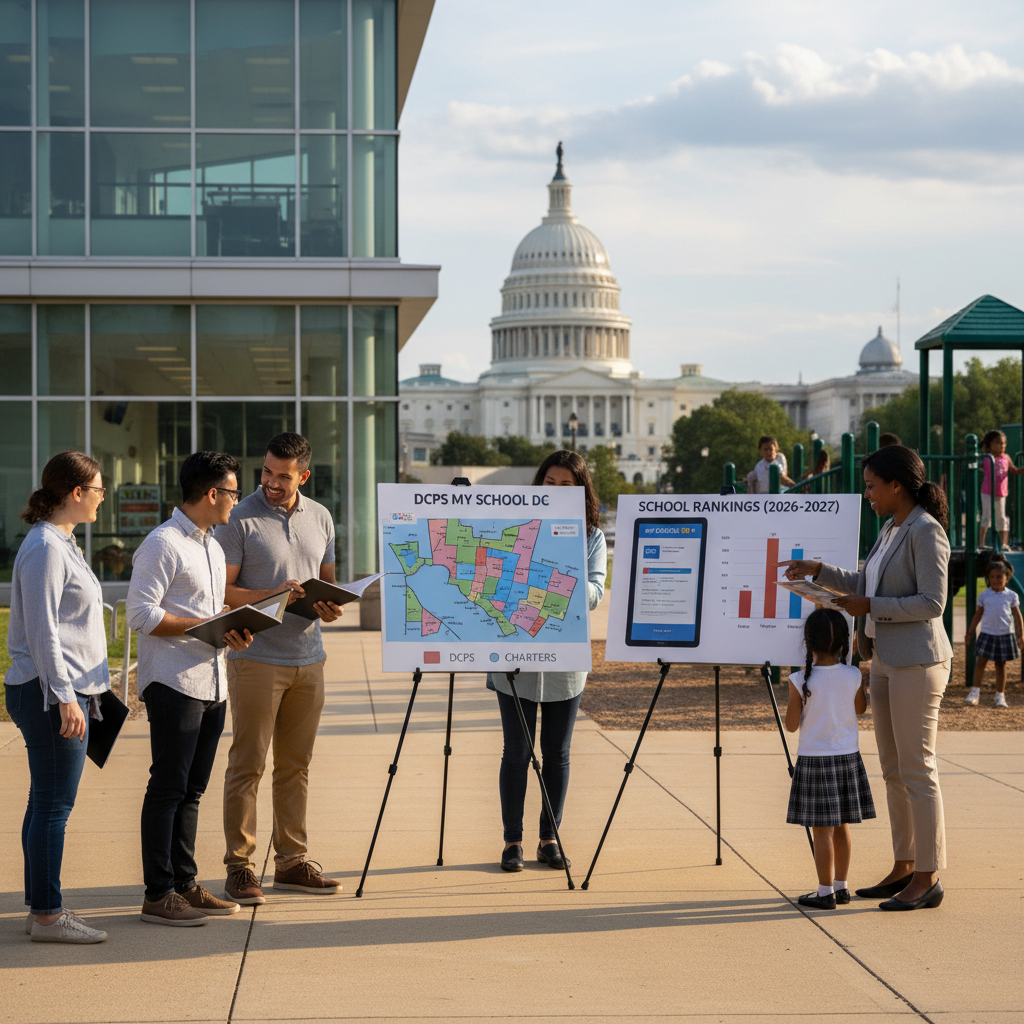
How to use rankings well:
- Compare like with like, a selective high school is not comparable to a neighborhood comprehensive campus.
- Read the methodology and look for subgroup performance and growth.
- Visit the school. A strong “fit” can beat a higher score.
For school-by-school operational details in DCPS, the District’s own School Profiles site is the quickest way to check basics like hours, enrollment, and contact information. For example, the DCPS profile comparison tool lists high school hours such as Anacostia High School (8:45 a.m. to 3:15 p.m.) and Ballou High School (9:00 a.m. to 3:30 p.m.) at profiles.dcps.dc.gov.
Best DC public high schools (what top lists actually show)
When parents search “best public high schools in DC,” they usually find some repeat names across U.S. News and Niche. The important context is that some of these schools are selective or program-based, and the admissions route may differ from a standard neighborhood high school.
- School Without Walls High School, 2130 G St NW, Washington, DC 20037. Frequently ranked #1 in D.C. by U.S. News. Website: U.S. News profile.
- BASIS DC, 410 8th St NW, Washington, DC 20004. Ranked #2 in D.C. by U.S. News. Website: U.S. News profile.
- Benjamin Banneker Academic High School, 800 Euclid St NW, Washington, DC 20001. Often appears near the top in D.C. rankings, including U.S. News. Website: U.S. News profile.
Take these lists as a starting point, then ask a second set of questions: What support services exist, what is the commute, what electives are offered, what is the special education approach, and how stable is staffing?
Best DC neighborhoods for DCPS options (commute, feeders, and realism)
In D.C., “best neighborhood for schools” can mean different things: strong in-boundary DCPS elementaries, multiple charter options within a short commute, or a feeder path you feel confident about through high school.
Rather than declare a single “best,” here is a practical neighborhood lens parents use when building a plan:
- Upper Northwest (Ward 3 and parts of Ward 2): Known for high-demand in-boundary elementaries and straightforward feeder patterns. Housing costs tend to be higher, and enrollment pressure can be intense.
- Capitol Hill and Near Northeast (Ward 6): Multiple DCPS elementaries, plus a dense set of charter options. Walkability and Metro access can make school logistics easier.
- Petworth, Brightwood, and Takoma (Ward 4): A mix of DCPS and charters, with families often combining an in-boundary plan with a lottery strategy for later grades.
- Brookland and Fort Totten area (Ward 5): Growing family population and a variety of school models. Commute patterns matter here, especially if you work downtown.
- River Wards (Wards 7 and 8): Families often focus on specific programs, school climate, and resources, as well as transportation. DCPS profile pages are useful for practical details like school hours and services.
For a deeper look at day-to-day neighborhood life that affects school decisions, including transit and amenities, see The ultimate guide to Washington, D.C. neighborhoods (2026).
Application timeline and checklist for DC families (PK3 through high school)
Deadlines can shift each year, so treat this as a workflow rather than a calendar. My School DC publishes the current season timeline and events at myschooldc.org.
A checklist that matches how families actually succeed:
- September to November: Identify 10 to 15 schools to research, then attend open houses. Build a transportation plan, including before-care and after-care needs.
- December to January: Create your My School DC account, confirm your child’s grade eligibility and cutoff dates, and refine a ranked list.
- Before the deadline: Submit the application, then screenshot or save your confirmation.
- Match day: Review results, accept and enroll promptly if offered.
- Spring and summer: Monitor waitlists and update contact info. My School DC explains how waitlists work at myschooldc.org/how-waitlists-work.
What to gather early, because it slows families down every year: proof of D.C. residency, your child’s birth certificate or passport, immunization records, and any IEP or 504 paperwork if applicable.
If your family is balancing school search with a busy D.C. events calendar, it helps to block weekends early. The city’s packed festival schedule, highlighted in Washington DC hosts major festivals ahead of nation’s 250th, is fun, but it can collide with open house season.
When you should call the hotline (and other local resources)
For lottery and application questions, the My School DC hotline is one of the fastest ways to get clarity: 202-888-6336. The school finder map also lists the hotline and email at find.myschooldc.org.
Consider calling or emailing if you have any of the following:
- Questions about how to rank schools and what preferences apply.
- Confusion about PK3 or PK4 eligibility.
- Waitlist movement and what actions you can take.
- Mid-year transfers or post-lottery options.
Families with students who have disabilities, are experiencing homelessness, are in foster care, or are military-connected should also review the specialized guidance in the My School DC FAQ at myschooldc.org/faq and consult DC’s official residency rules via OSSE at osse.dc.gov/page/office-enrollment-residency.
For parents trying to understand the “whole child” side of schooling, including health supports and staffing, it can be worth reading broader education coverage too, such as Franklin University professor named national school nurse, which highlights how school health roles vary widely by district and can shape day-to-day experience.
If you are looking for family-friendly activities while you tour schools or wait for decisions, you can borrow ideas from other cities, too. This cross-city list has solid warm-weather picks: 50+ fun things to do with kids in Los Angeles this summer.