Washington, D.C. is the rare major city where a world-class itinerary can cost $0 in admission, if you know how to plan around timed-entry passes, security lines, and the geography of the National Mall. The Smithsonian Institution alone operates a vast complex of free museums, and the city’s monument core is essentially an open-air history book. Add in free gardens, architecture, and cultural centers, and you can fill a long weekend or a full month without paying for a ticket.
This guide is written for tourists and locals on a budget, with practical details that matter in the moment, including addresses, typical hours, how to handle reservations, and what to pair together so you spend less time commuting. Where timed-entry is required, I note it, because the most common “free in D.C.” frustration is showing up without a pass.
Best free Smithsonian museums on the National Mall (and how to visit them)
If you’re searching “free museums in D.C.” you’re really searching for the Smithsonian. Admission is free at Smithsonian museums, and most are open daily except Dec. 25. A handful require free timed-entry passes, so check the Smithsonian’s official visitor page before you go: si.edu/visit/museums.
Smithsonian National Museum of Natural History, 10th St. & Constitution Ave. NW, Washington, DC 20560. Hours are typically 10 a.m. to 5:30 p.m. daily. It is the easiest “walk-in wow” on the Mall, with dinosaur fossils, the Hope Diamond, and huge, air-conditioned halls that make it a smart midday stop in summer.
Smithsonian National Museum of American History, 1300 Constitution Ave. NW, Washington, DC 20560. Typical hours: 10 a.m. to 5:30 p.m. daily. Come for Americana icons, then slip out the Mall-side doors to continue west toward the Washington Monument.
Hirshhorn Museum and Sculpture Garden, 700 Independence Ave. SW, Washington, DC 20560. Typical hours: 10 a.m. to 5:30 p.m. daily. Contemporary art can be the perfect counterbalance after a history-heavy morning, and the Sculpture Garden is a low-key breather.
National Museum of the American Indian, 4th St. SW & Independence Ave. SW, Washington, DC 20560. Typical hours: 10 a.m. to 5:30 p.m. daily. The building alone is worth a visit, and it sits close to the Capitol end of the Mall for easy pairing with the Botanic Garden.
Smithsonian National Air and Space Museum (D.C. location), 600 Independence Ave. SW, Washington, DC 20560. Admission is free but commonly requires a free timed-entry pass. If this is a must for your group, lock in passes early and build your day around your entry window.
Smithsonian National Museum of African American History and Culture, 1400 Constitution Ave. NW, Washington, DC 20560. Typical hours: 10 a.m. to 5:30 p.m. Tuesday through Sunday, and 12 to 5:30 p.m. Monday (10 a.m. on federal holidays). Free timed-entry passes are required. If you cannot get a pass, consider visiting nearby outdoor sites first, then try for later availability.
Money-saving tip: Because these museums are free, you can do shorter “highlight visits” instead of marathon days. A local trick is to plan two museums plus monuments, rather than attempting four museums in a row.
Free non-Smithsonian museums and cultural institutions worth your time
D.C.’s free cultural lineup extends beyond the Smithsonian. These stops are excellent when the Mall museums are packed, or when you want a more neighborhood-focused day.
National Gallery of Art (West Building and East Building), 6th St. & Constitution Ave. NW, Washington, DC 20565. Admission is free. Hours are typically 10 a.m. to 5 p.m. daily. Don’t miss the underground concourse between buildings, where a light installation turns the walkway into part of the experience. It is one of the best “free, indoors, and calm” options on the Mall.
United States Holocaust Memorial Museum, 100 Raoul Wallenberg Pl SW, Washington, DC 20024. Admission is free, but timed-entry passes are often required depending on season and capacity. This is a powerful, emotionally demanding visit, plan time to decompress afterward at the nearby memorials or along the Tidal Basin.
John F. Kennedy Center for the Performing Arts, 2700 F St. NW, Washington, DC 20566. Many visitors miss that the Kennedy Center offers free tours (availability varies), and the Rooftop Terrace is one of the best free views in the city. Washington.org notes a free shuttle from Foggy Bottom Metro that runs frequently throughout the day and evening. Check the Kennedy Center visitor page for current tour hours: kennedy-center.org/visit.
National Museum of Women in the Arts, 1250 New York Ave. NW, Washington, DC 20005. This museum is not always free, but it offers Free Community Day on the first Sunday of the month, per Washington.org. If you can align your trip with that day, it is one of the best values in downtown.
Budget note: Some private museums in D.C. have “suggested donation” windows or free days. Always verify on the official site before traveling across town, because schedules change.
Best free monuments and memorials on the National Mall (open 24 hours)
If you want “free things to do at night in D.C.” start with the monuments. National Mall memorials are among the city’s best budget experiences because they are outdoors, open around the clock, and often less crowded after dinner.
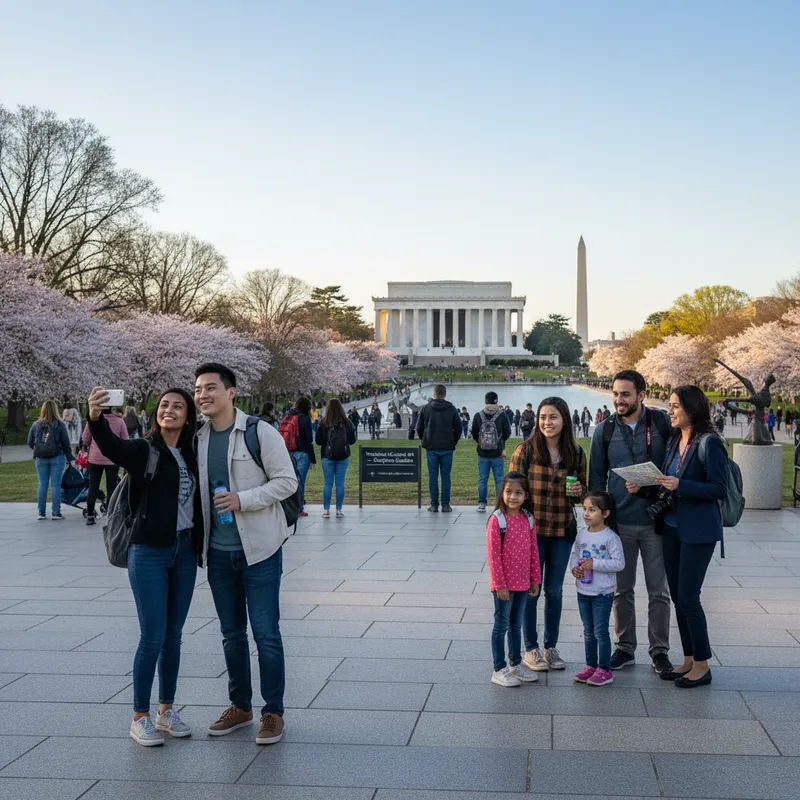
Lincoln Memorial, 2 Lincoln Memorial Cir NW, Washington, DC 20037. Open 24 hours. Sunrise is a local favorite, with fewer tour groups and a quiet view down the Mall.
Vietnam Veterans Memorial, 5 Henry Bacon Dr NW, Washington, DC 20037. Open 24 hours. The wall is most moving in the evening when visitors are sparse and reflections sharpen.
Korean War Veterans Memorial, 900 Ohio Dr SW, Washington, DC 20024. Open 24 hours. The stainless steel figures take on a different mood under lights.
National World War II Memorial, 1750 Independence Ave. SW, Washington, DC 20024. Open 24 hours. Its central location makes it an ideal “connector” between the Lincoln Memorial and the Washington Monument.
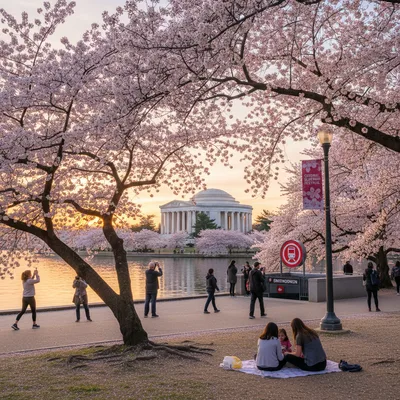
Martin Luther King, Jr. Memorial, 1964 Independence Ave. SW, Washington, DC 20024. Open 24 hours, on the Tidal Basin. Pair it with a loop walk past the Jefferson Memorial for a full, free waterfront circuit.
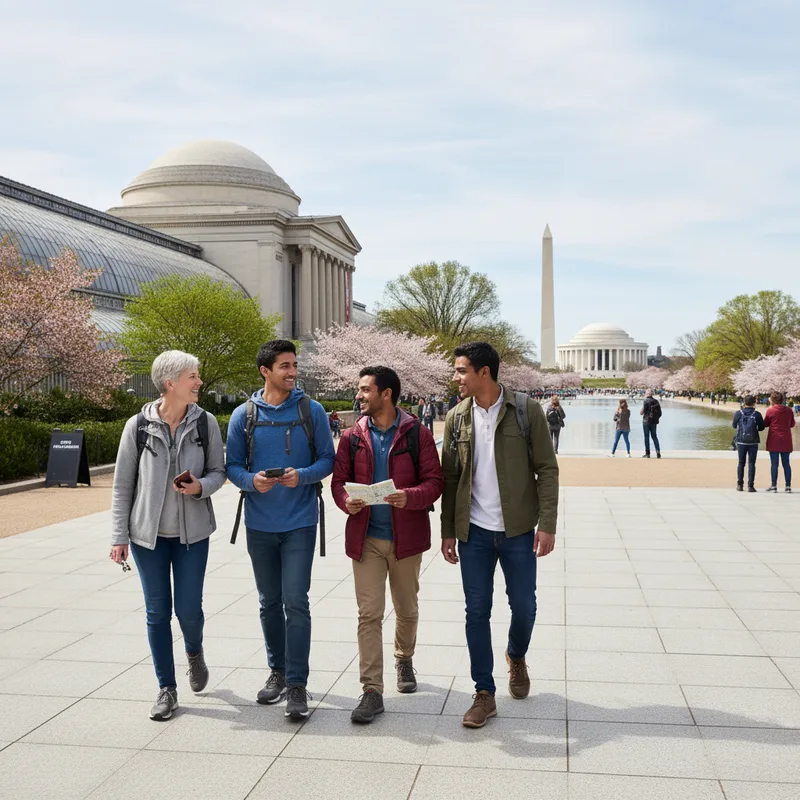
Washington Monument grounds, 2 15th St NW, Washington, DC 20024. The monument itself has ticketing, but the surrounding lawns and views are free and iconic, especially for picnic-style lunches from a grocery store.
Free gardens, scenic walks, and outdoor attractions in D.C.
For families, runners, and anyone who needs a museum break, the city has standout free green spaces that still feel like attractions.
U.S. Botanic Garden, 100 Maryland Ave SW, Washington, DC 20001. Admission is free. Hours vary seasonally, but it is commonly open from morning to late afternoon. Washington.org lists it as a can’t-miss free stop on the Mall. The Conservatory is a reliable rainy-day plan and a lifesaver during winter when you want something warm and bright without spending money.
National Zoo, 3001 Connecticut Ave NW, Washington, DC 20008. Admission is free, but the Smithsonian notes that free entry passes are required. Expect to pay if you drive and park, so budget-minded visitors should take Metrorail to Cleveland Park or Woodley Park and walk.
National Mall lawns and the Tidal Basin loop, West Basin Dr SW & Ohio Dr SW, Washington, DC. Cost: free. Hours: always open. This is the core “see D.C. for free” route, and it is flexible, you can make it a two-mile stroll or a half-day wander with museum pop-ins.
U.S. National Arboretum, 3501 New York Ave NE, Washington, DC 20002. Admission is free. It is not on the Metro, so it is easiest by car, bike, or rideshare, but it delivers an entirely different side of D.C., including the famous Capitol Columns. It is one of my go-to recommendations for locals who think they’ve “done” the Mall already.
Free attractions on Capitol Hill: Capitol, Library of Congress, and more
Search “free things to do near the Capitol” and you’ll find one of the city’s best clusters. Everything here is dense, photogenic, and surprisingly approachable if you arrive early.
Library of Congress (Thomas Jefferson Building), 10 First St. SE, Washington, DC 20540. Admission is free, but timed-entry tickets may be required depending on operations. The Great Hall is a jaw-dropper, and the experience feels far more expensive than it is. Check the Library’s official visitor information for current ticketing: loc.gov/visit.
United States Capitol Visitor Center, 1 First St. SE, Washington, DC 20004. Many tours are free, but require advance reservation. If you want to connect your sightseeing to what’s happening in government, it is worth pairing this stop with a skim of local accountability reporting like Digital Tools Transform Public Access to DC Court Records, which explains how public access and transparency are evolving in the District.
Supreme Court of the United States, 1 First St. NE, Washington, DC 20543. The building’s public areas and lectures are free when available, but hours depend on the Court calendar and security needs. Consult the Court’s official visitor page before you go: supremecourt.gov/visiting.
United States Botanic Garden is also right here, which makes it easy to create a full “Capitol Hill free day” without returning to the Mall’s center.
How to plan a free D.C. day: passes, Metro tips, and budget pitfalls
1) Start with what requires a pass. The Smithsonian lists four locations that require free entry passes, including the National Museum of African American History and Culture, the National Air and Space Museum (D.C.), and the National Zoo. Build your schedule around the timed entry, then fill gaps with walk-in museums and monuments.
2) Go early or go late. The Mall’s security lines swell late morning. If you can arrive at museum doors at opening, you’ll see more with less waiting. For monuments, the opposite often works, after dark is cooler, calmer, and dramatically lit.
3) Cluster your stops to reduce transit costs. The National Mall is walkable end to end, but it is longer than it looks. If you’re with kids or heat-sensitive visitors, pick a “west day” (Lincoln, WWII, nearby museums) and an “east day” (Capitol, Botanic Garden, museums near 4th to 7th Streets).
4) Watch out for the hidden costs. Parking near the Mall is expensive and scarce. Food trucks and museum cafes add up quickly. For a true budget day, carry a refillable water bottle and grab sandwiches from a grocery store. If you want a celebratory meal without guessing, consult The ultimate guide to free things to do in Toronto (2026 edition).
5) Use free Wi-Fi breaks. The Kogod Courtyard at the National Portrait Gallery and Smithsonian American Art Museum complex is a popular “reset” space downtown with seating and reliable connectivity, and it is an easy add-on between museums.
6) Consider free walking tours with tip-based pricing. D.C. has several reputable operators that run tours marketed as free, with tipping encouraged. They can be a smart way to get context on neighborhoods without paying a fixed ticket price.
Free D.C. itineraries for visitors and locals (half day, full day, and weekend)
Half-day, first-timer (classic Mall highlights): Start at the Lincoln Memorial at 8 a.m., walk to WWII, continue to the Washington Monument grounds, then choose one museum (Natural History or American History). Cost: $0, other than Metro fare and snacks.
Full-day, family-friendly (animals, air conditioning, and wide spaces): Morning at the National Zoo (reserve free passes), lunch picnic, afternoon at Natural History for dinosaurs and gems. If you still have energy, finish with a sunset monument walk.
Full-day, art-forward (calm pacing): National Gallery of Art (both buildings) plus the Sculpture Garden, then head to the Kennedy Center for a late afternoon view from the terrace. This itinerary minimizes security re-entry and keeps walking distances reasonable.
Weekend, “I’ve done the Mall” locals plan: Saturday at the U.S. National Arboretum, then Penn Quarter for the Portrait Gallery and the Kogod Courtyard. Sunday on Capitol Hill, Library of Congress, Supreme Court (if open), and a Botanic Garden loop. If you’re tracking broader civic changes while you’re here, keep an eye on federal updates, including education policy, via Education Department dismantling continues with new office closures.
For readers planning a wider U.S. trip on a budget: If D.C. is one stop on a bigger itinerary, it can be useful to compare free urban sightseeing with other budget-forward outdoor travel, like California's best campgrounds: top spots for tents, RVs, and cabins.