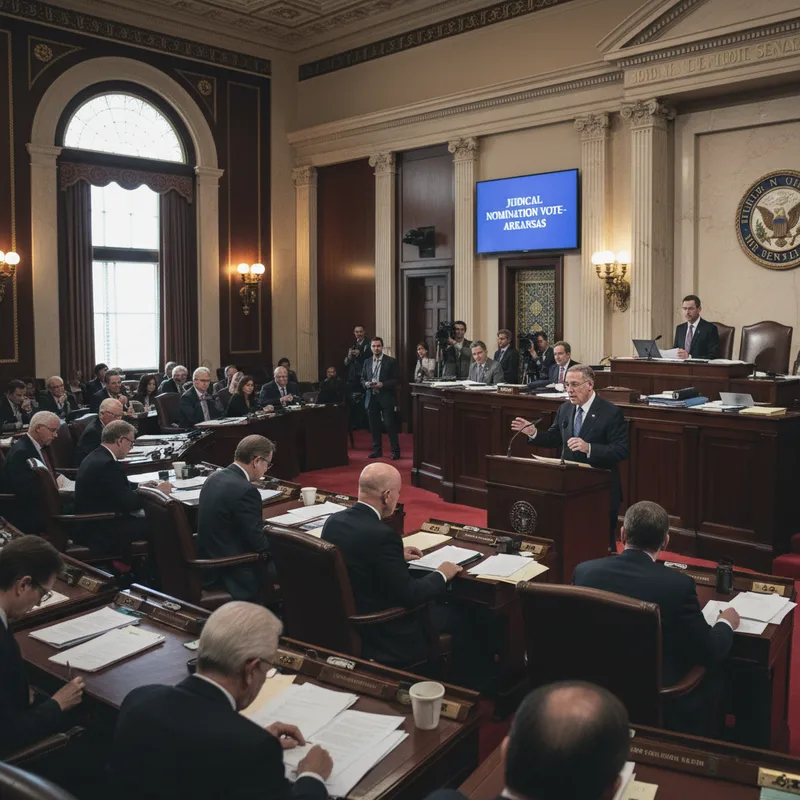
The U.S. Senate is set to return to substantive legislative business on Monday, April 13, after a series of brief, procedurally required meetings. The chamber will convene at 3:00 p.m. with its first major vote of the week scheduled for 5:30 p.m. on a motion to advance the nomination of John Shepherd to be a District Judge for the Western District of Arkansas.
The return to a full schedule follows several pro forma sessions, including one held on Thursday, April 9, which was gaveled into session by Senator John Barrasso of Wyoming. These sessions, which often last only a few minutes, are a constitutional necessity, ensuring that the chamber does not officially adjourn for more than three days without the consent of the House of Representatives. While no legislative business is conducted, these meetings formally keep the Senate in session, a practice that also prevents a president from making recess appointments.
A week of procedural sessions
The Senate has been in a holding pattern, with pro forma sessions on Monday, April 6, and Thursday, April 9, serving to punctuate a period of relative quiet on the floor. These formalities are a standard feature of the congressional calendar, allowing legislative business to pause while still fulfilling constitutional obligations and allowing staff and members to manage work in their home states and committees.
The quiet on the Senate floor is set to end Monday afternoon. Following any opening remarks from party leaders, the Senate will immediately resume consideration of the Shepherd nomination. The scheduled 5:30 p.m. vote is on cloture, a procedural motion to end debate on the nomination. If the motion is successful, it clears the path for a final confirmation vote to take place later in the week.
Judicial nomination takes center stage
The focus on the Shepherd nomination highlights the Senate's critical role in staffing the federal judiciary, a duty derived from the Constitution's "advice and consent" clause. Federal judicial appointments are lifetime positions, and the process of confirming nominees is often a flashpoint for intense political debate. The cloture vote itself is a key hurdle, a mechanism designed to overcome filibusters or extended debate that could otherwise stall a nomination indefinitely.
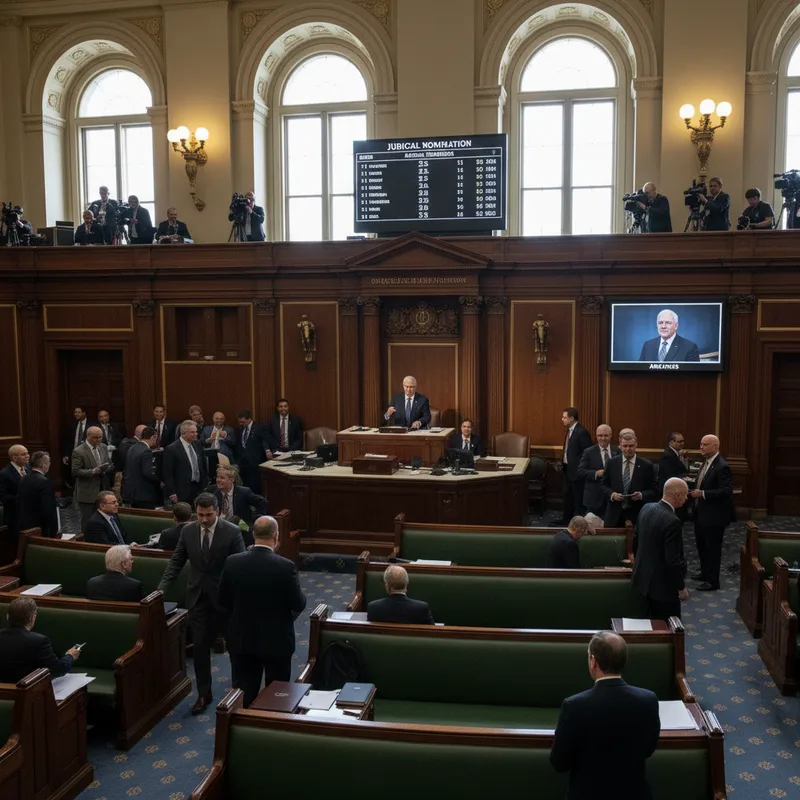
The outcome of Monday's vote will be closely watched as an indicator of the legislative temperature and the ability of the chamber's majority to advance its agenda. Success would signal momentum, while failure could portend further gridlock on judicial and legislative priorities.
Beyond the floor vote, Senate committees are preparing for a busy week of hearings and meetings. On Monday, the Commission on Security and Cooperation in Europe will receive a briefing on the role of Vatican diplomacy in global politics. These committee hearings are where the detailed work of legislating and oversight largely takes place, examining issues that may eventually reach the Senate floor for a full vote.
Commerce committee to tackle tech and transportation
On Tuesday, April 14, the influential Committee on Commerce, Science, and Transportation is scheduled to hold a business meeting to consider a slate of bills covering a wide range of modern issues. The agenda demonstrates the breadth of challenges facing the nation, from mental health to national security and technological innovation. On Tuesday, April 14, the influential Committee on Commerce, Science, and Transportation is scheduled to hold a business meeting to consider a slate of bills covering a wide range of modern issues. The agenda demonstrates the breadth of challenges facing the nation, from mental health to national security and technological innovation. One significant piece of legislation, S.1885, would mandate the Federal Trade Commission to develop and implement a mental health warning label for social media platforms. The proposal reflects growing concerns about the impact of social media on young people, an issue also being debated at the state level, as seen with a recent bill passed by the Massachusetts House. The committee will also examine S.3257, a bill aimed at revising Federal Aviation Administration regulations for pilots who disclose a mental health diagnosis, and S.1962, which deals with the cybersecurity of commercial satellite systems, touching on issues of both commerce and national security. The committee's oversight extends to competition and trade, areas also under scrutiny by other federal bodies, such as the Justice Department's investigation into the Los Angeles school district gender policy.
A chamber steeped in history
The legislative battles of the 119th Congress unfold within a room and a building rich with history. The current Senate Chamber, first occupied in 1859, was intentionally designed without windows by architect Thomas U. Walter to insulate senators from the noise of the city outside. Its appearance was significantly updated during a 1949-1950 renovation, which replaced cast-iron details with red Levanto marble and installed a new plaster and stainless steel ceiling to improve acoustics and modernize the decor, according to the Architect of the Capitol.
The chamber sits within the U.S. Capitol Complex, which itself has transformed dramatically over the centuries. What are now parks, monuments, and congressional office buildings were once bustling residential and commercial neighborhoods. Each of the 100 senators sits at a desk with its own history, many of which have been used for generations and bear the carved names of their previous occupants, a silent testament to the continuity and change that defines the institution.
The upcoming vote on cloture for the Shepherd nomination on Monday evening represents the next chapter in that history, serving as the first major test of the week for the chamber's legislative machinery.