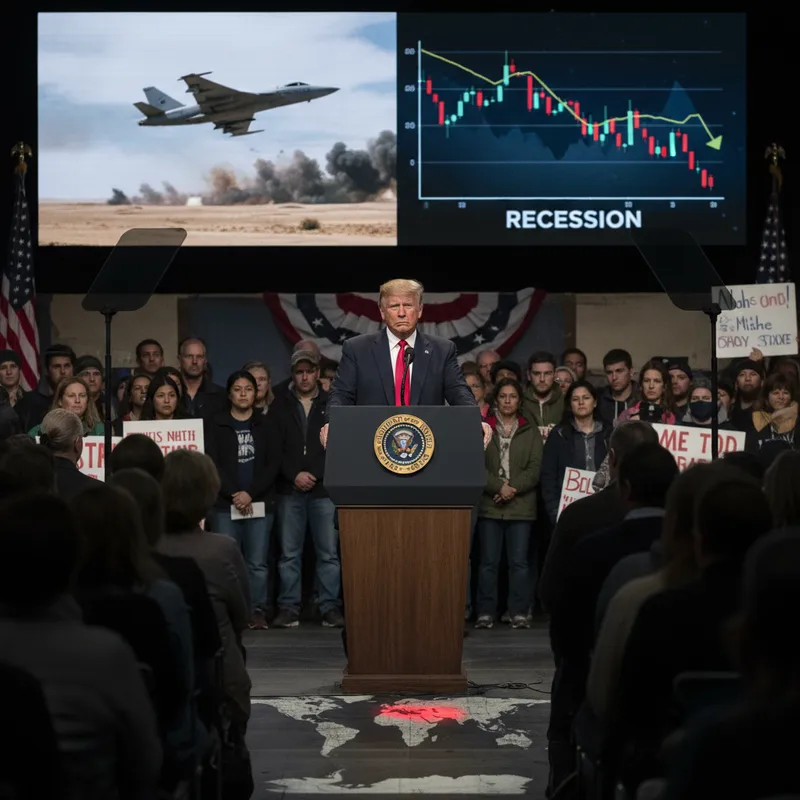
Even as the war with Iran shows signs of concluding, the domestic political fallout for President Donald Trump and the Republican party is just beginning to crystallize. The conflict, which has resulted in the deaths of 13 American service members and a rising number of injuries, has left the administration contending with a skeptical public, volatile markets, and fractures within its own political base.
The president’s decision to launch a major military offensive against the regime in Tehran without significant groundwork with the American people or Congress has put him on the defensive. Now, as the midterm elections approach, the war in Iran has cast a harsh light on the political dangers of chaos, a theme that has marked pivotal moments of the Trump presidency.
The financial and human costs are mounting. Beyond the tragic loss of military personnel, American taxpayers are facing a significant bill for the war itself and the potential reconstruction of Iran, estimated to be in the hundreds of billions of dollars. This adds to a national debt already under strain. The conflict has also sent shockwaves through the global economy, with shipping traffic in the crucial Strait of Hormuz grinding to a near standstill, directly contributing to a surge in gas prices and prompting warnings about transport cuts, as detailed in reports from Greater Wellington.
Public sentiment turns against war
The Trump administration’s justification for the war has not resonated with a majority of Americans. According to recent polling from the Pew Research Center, nearly two-thirds of the public are not confident in the president’s handling of Iran policy. This skepticism is compounded by the tangible economic pain felt by consumers across the country.
Gas prices have surged by more than a dollar per gallon, according to data from AAA, and the cost of goods reliant on fuel for transportation is also on the rise. While the administration points to the decimation of the Iranian navy as a key military success, many Americans are weighing that against the immediate impacts on their wallets and a heightened fear of retaliatory terrorism. The sense of insecurity has grown, despite the White House’s claims of a strategic victory.
This disconnect is fueled by the administration’s own past statements. Voters were told last summer that American strikes had effectively neutralized Iran’s nuclear weapons program, making the sudden escalation into a full-blown conflict feel abrupt and poorly justified to many. The perception of chaos, rather than control, has undermined the president's core message of strength and security, and the U.S. economy, which was already slowing, now faces new headwinds.
Cracks appear in MAGA base
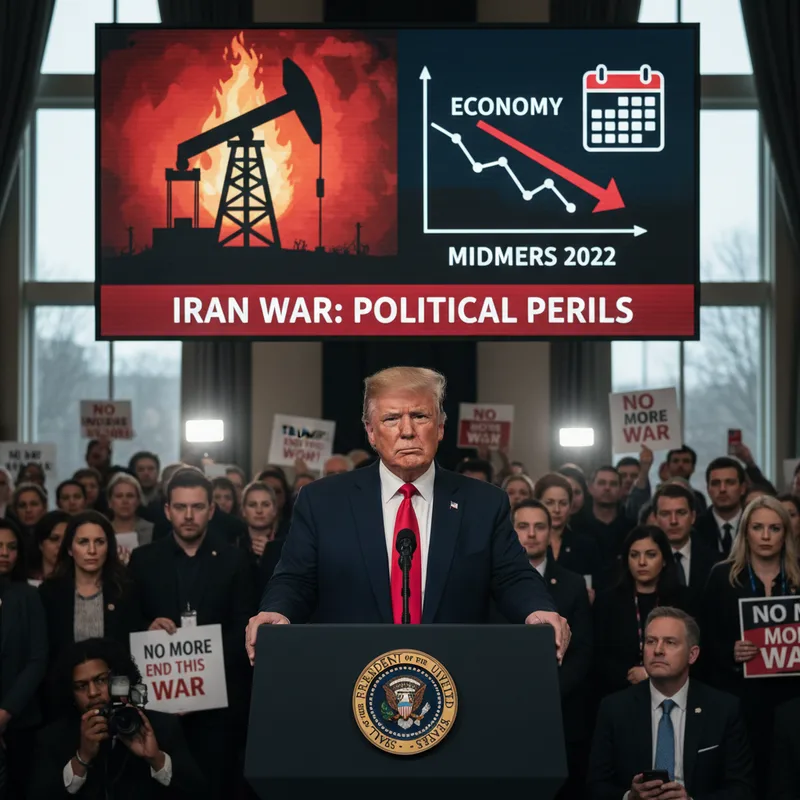
Perhaps more surprising than the public’s disapproval are the signs of dissent from within President Trump’s own political circles. Prominent MAGA influencers and some Republicans in Congress have become increasingly willing to publicly criticize the war. This has led to public disputes and infighting among Trump’s staunchest supporters, creating a disunity the party can ill afford with elections on the horizon.
These internal critics question the necessity and the handling of the war, creating a narrative that competes directly with the White House’s. For a president who has thrived on party loyalty, this dissent represents a significant challenge. The administration is now forced to not only sell the war to the general public but also to rebuild consensus within its own coalition.
The situation draws parallels to the events of 2020, when the shadow of the COVID-19 pandemic and widespread civil unrest undermined the president’s image of being in command. His opponent at the time, Joe Biden, campaigned on a promise to restore calm and steady leadership, a message that appeared to resonate with a decisive portion of the electorate. As the current conflict continues to unfold, Democrats are preparing to argue that it is once again time to apply the brakes to the "Trump Train."
Democrats focus on electability
Meanwhile, the Democratic party is responding to the political climate with a sharp focus on November. Recent focus groups of Democratic voters in the critical Senate battleground states of Maine and Michigan reveal a highly engaged but dissatisfied electorate. Describing their own party as “weak,” “spineless,” and “floundering,” these voters are prioritizing one thing above all else: winning.
The 13 participants, a mix of progressives and moderates, overwhelmingly indicated a preference for a candidate who can defeat a Republican in the general election over one who simply promises to fight President Trump. This pragmatism signals a strategic shift among the Democratic grassroots, who see the midterm elections as the most effective tool to curb the president’s power.
These likely Democratic primary voters realize they can thwart President Trump in 2027 only if they win elections this November, so electability is a key factor as they approach their primaries.
The focus groups, conducted by Syracuse University, Engagious, and Sago, found that these voters view the upcoming Senate races as their best chance to blunt the Trump administration's agenda. “I think the only way we’re going to get Trump under control is through the midterm elections,” said Jennifer R., a 61-year-old voter from Maine.
As Democrats in states like Maine and Michigan navigate primaries that have exposed generational and ideological divides, the overarching goal remains clear. They are looking for candidates who can build broad coalitions and win in November, a strategy they believe is essential to counter a presidency they see as chaotic and damaging. The ultimate question for President Trump is not whether he can frame the outcome in Iran as a military victory, but whether he can persuade voters that it was worth the cost and the chaos.