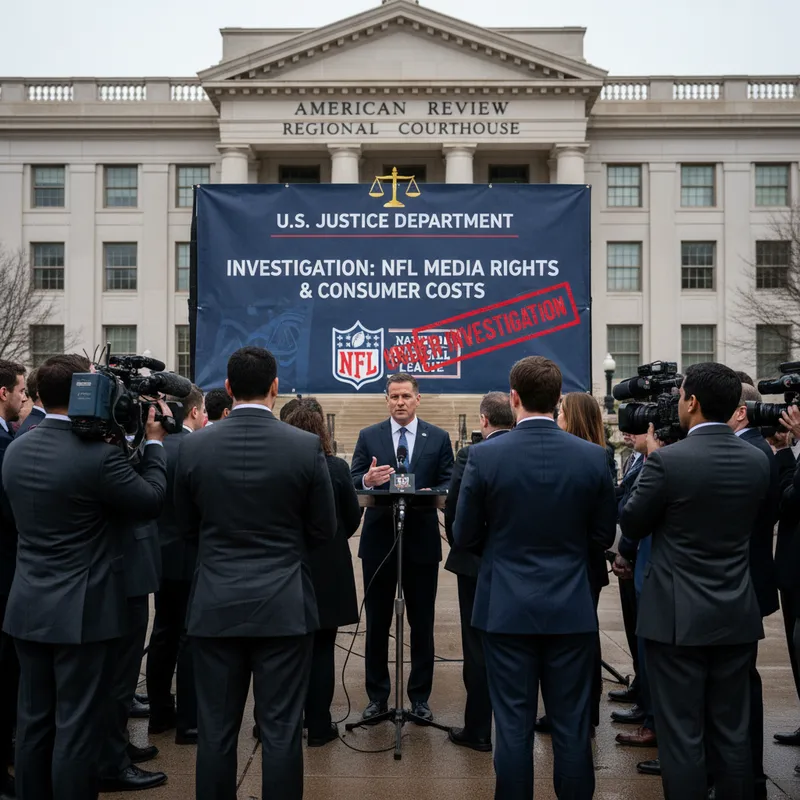
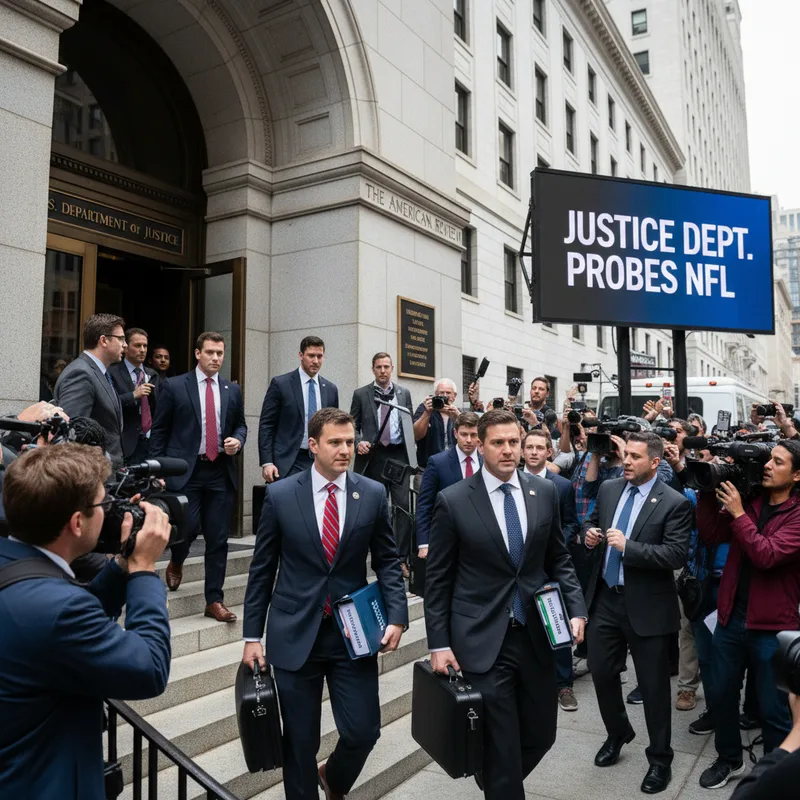
The Department of Justice is investigating the National Football League for potential anticompetitive practices, a government official confirmed. The inquiry centers on the rising costs for consumers and the competitive landscape for media providers in the lucrative world of professional football broadcasting.
A government official, who spoke on the condition of anonymity as they were not authorized to discuss an ongoing investigation, said the probe is “about affordability for consumers and creating an even playing field for providers.” The investigation was first reported by The Wall Street Journal.
In response to the reports, two sources with knowledge of the situation stated that the NFL has not received a formal notification that the league is under investigation. These individuals also spoke on the condition of anonymity because they are not authorized to comment on potential legal matters.
Scrutiny on sports broadcasting grows
The investigation arrives at a time of increasing federal scrutiny over the rapidly changing media landscape for live sports. For decades, fans could watch most games on broadcast television. However, in recent years, leagues have signed multi-billion dollar exclusive contracts with streaming services, forcing viewers to purchase multiple subscriptions to follow their favorite teams and the league at large.
This fragmentation has drawn concern from regulators and lawmakers. The Federal Communications Commission (FCC) is currently seeking public comments on the ongoing migration of live sports from free broadcast channels to paid streaming platforms. This shift affects millions of American households and raises questions about accessibility and affordability for a pastime deeply embedded in the national culture.
The NFL’s media rights are among the most valuable in all of entertainment. Its current deals with CBS, NBC, Fox, ESPN/ABC, Amazon, and Google are worth more than $110 billion. While the league maintains that the majority of its games remain on free television, key matchups are now exclusively on paid platforms. Amazon Prime Video streams "Thursday Night Football," while Google’s YouTube TV holds the exclusive rights to the "NFL Sunday Ticket" package, which allows fans to watch out-of-market games.
The legal framework for sports broadcasting
At the heart of any potential antitrust case is the collision of modern media deals with decades-old legislation. The foundation of U.S. antitrust law is the Sherman Antitrust Act of 1890, which prohibits business practices that unreasonably restrain trade and create monopolies.
However, professional sports leagues enjoy a specific, limited exemption. The Sports Broadcasting Act of 1961 allows leagues like the NFL to pool the television rights of their individual teams and sell them as a single package to broadcasters. This exemption was granted to protect the league's ability to negotiate national TV deals, which were seen as beneficial for the sport's growth and stability. The Justice Department’s investigation will likely examine whether the NFL’s current digital and streaming agreements stretch beyond the protections afforded by the 1961 act. Similar issues have surfaced in the Los Angeles school district, where Justice Department investigates Los Angeles school district gender policy. The focus on creating an "even playing field for providers" suggests the inquiry could explore whether the NFL’s massive, exclusive deals with tech giants and legacy media companies unlawfully shut out smaller or potential competitors from the market, ultimately harming consumer choice.
Implications for fans and the future of football
This is not the first time the NFL's broadcasting model has faced legal challenges. The "NFL Sunday Ticket" package, in particular, has been the subject of class-action lawsuits arguing that the league’s out-of-market distribution model is anticompetitive and inflates prices for consumers. The current DOJ investigation adds another layer of federal pressure on the league’s business practices.
While the NFL states that 87% of its games are aired on free broadcast TV, this figure primarily applies to fans watching their local team. For those who follow a team in a different market or want comprehensive access to all league games, the cost has steadily climbed, requiring a combination of traditional cable or satellite and multiple streaming subscriptions.
The outcome of the Justice Department’s probe could have significant long-term consequences for how Americans watch football. A finding of anticompetitive behavior could force changes to the way the NFL structures its media deals, potentially leading to more games on broadcast television, lower prices for subscription packages, or opportunities for different media companies to bid on rights. As the investigation proceeds, the central question remains whether the current model serves the best interests of the fans or the league’s bottom line.