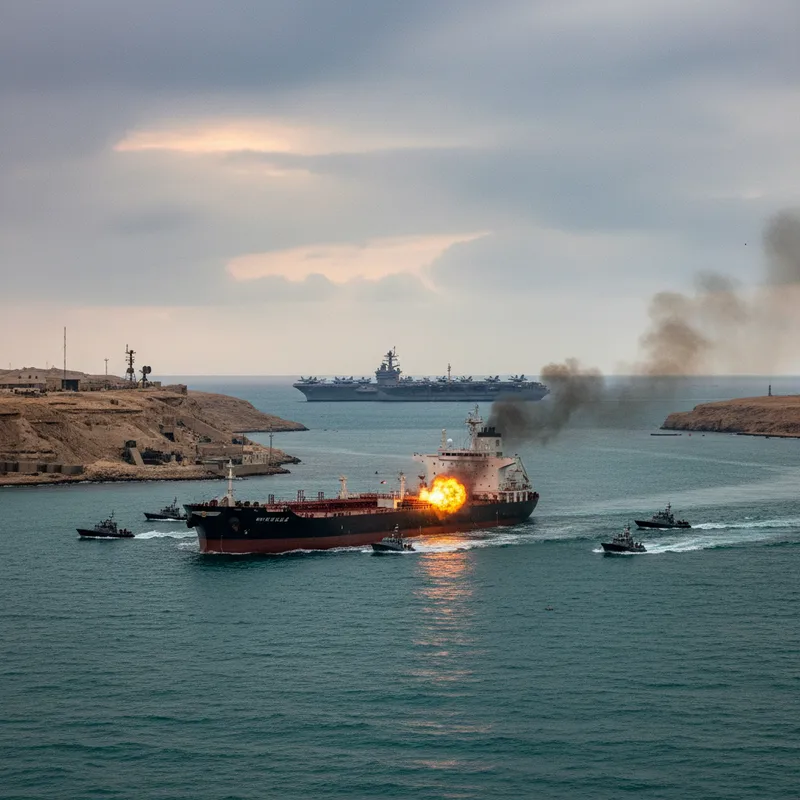
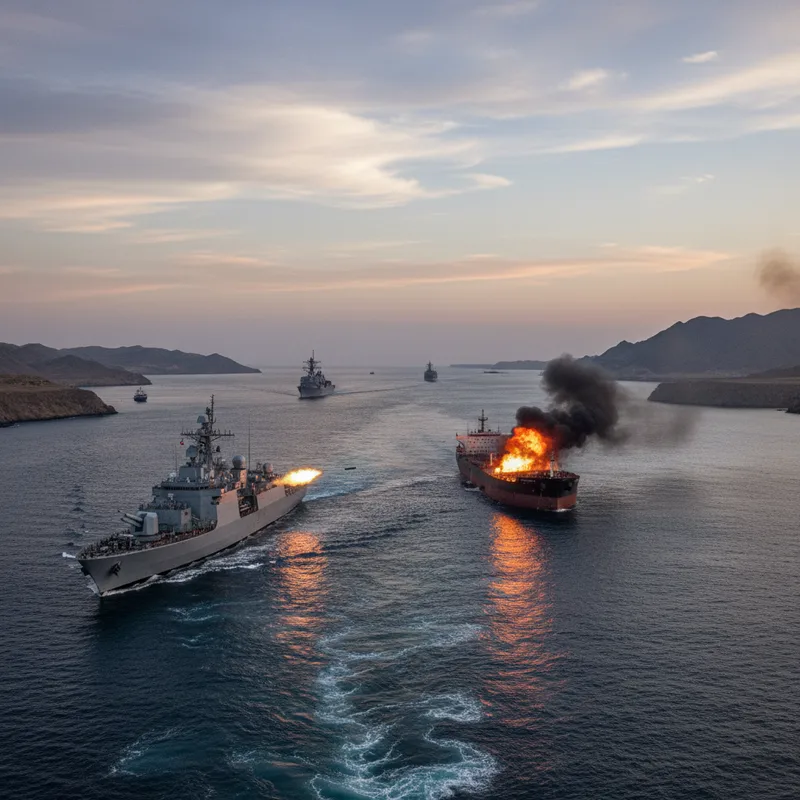
Iranian gunboats have fired on a commercial tanker in the Strait of Hormuz, and Tehran has reimposed severe restrictions on passage through the vital waterway, citing a United States blockade. The provocative move on Friday threatens to choke off a fifth of the world’s oil supply, sending shockwaves through global energy markets and setting up a major confrontation with the U.S.
The closure of the world’s most important maritime chokepoint for oil represents a significant escalation in the long-simmering conflict between Washington and Tehran. The incident involving the tanker, which has not yet been identified, marks a dangerous new phase, echoing a series of naval confrontations in the 1980s that drew American forces into direct conflict with Iran.
Global oil prices are expected to climb on the news, which could translate to higher gasoline prices for American consumers. The instability has already had an impact on adjacent industries, with Air Canada announcing it will suspend flights to New York’s JFK airport for nearly five months, citing the soaring cost of jet fuel.
A familiar conflict
For military analysts and historians, the events unfolding in the Persian Gulf are a disturbing reminder of the so-called 'Tanker War' of the 1980s. That conflict began during the eight-year war between Iran and Iraq. After Iraqi President Saddam Hussein began attacking Iranian oil tankers to cripple Tehran’s economy, Iran retaliated by attacking ships trading with Iraq and its allies, including Kuwait and Saudi Arabia.
The escalating attacks on international shipping, which damaged hundreds of vessels, eventually drew in the United States. In 1987, the Reagan administration launched Operation Earnest Will, a mission to protect Kuwaiti oil tankers that were reflagged with American flags. U.S. Navy warships provided armed escort for convoys of tankers passing through the Strait of Hormuz and the Persian Gulf.
That period was marked by deadly miscalculations and direct military clashes. In 1987, an Iraqi jet mistakenly fired Exocet missiles at the USS Stark, a guided-missile frigate, killing 37 American sailors. The following year, the USS Samuel B. Roberts struck an Iranian mine, blowing a large hole in its hull and injuring 10 sailors. In retaliation, the U.S. launched Operation Praying Mantis, a one-day naval battle that saw American forces destroy two Iranian oil platforms and sink or severely damage six Iranian naval vessels. It was the largest American naval surface engagement since World War II.
High stakes for the global economy
The strategic importance of the Strait of Hormuz cannot be overstated. According to the U.S. Energy Information Administration, approximately 21 million barrels of oil per day, or about 21% of global petroleum liquids consumption, pass through the strait. It is the only sea route from the Persian Gulf to the open ocean. Major Asian economies like China, Japan, South Korea, and India are particularly dependent on oil shipments from the Persian Gulf, and similar concerns about rising anti-immigrant sentiment echo in diverse communities, as seen in the Papatoetoe community's confrontation with growing anti-Indian sentiment.
The closure comes at a fragile time for the global economy, which is already grappling with the fallout from various international tensions, including a delicate ceasefire in the Levant. The economic consequences will test the resolve of the Trump administration and its allies as they formulate a response.
A critical test for the White House
The responsibility for navigating this crisis falls squarely on President Trump's administration. The confrontation is the latest in a series of tense standoffs with Iran that have defined the president's foreign policy in the Middle East. While the White House has not yet issued a formal statement on the latest escalation, officials are reportedly monitoring the situation closely.
The U.S. maintains a significant military presence in the region, with the Navy’s Fifth Fleet headquartered in Bahrain. Any response will require a careful calculation of risk to avoid a wider war while ensuring the freedom of navigation that underpins international law and commerce.
The parallels to the 1980s Tanker War present a clear historical playbook, but the geopolitical landscape has shifted significantly. Iran’s military capabilities, particularly its use of asymmetric warfare tactics involving small boats, drones, and mines, pose a complex threat to conventional naval forces. The international community now waits to see how Washington will respond, with the stability of the global economy hanging in the balance. The next move by the United States will be critical in determining whether the situation de-escalates or spirals into a larger regional conflict.