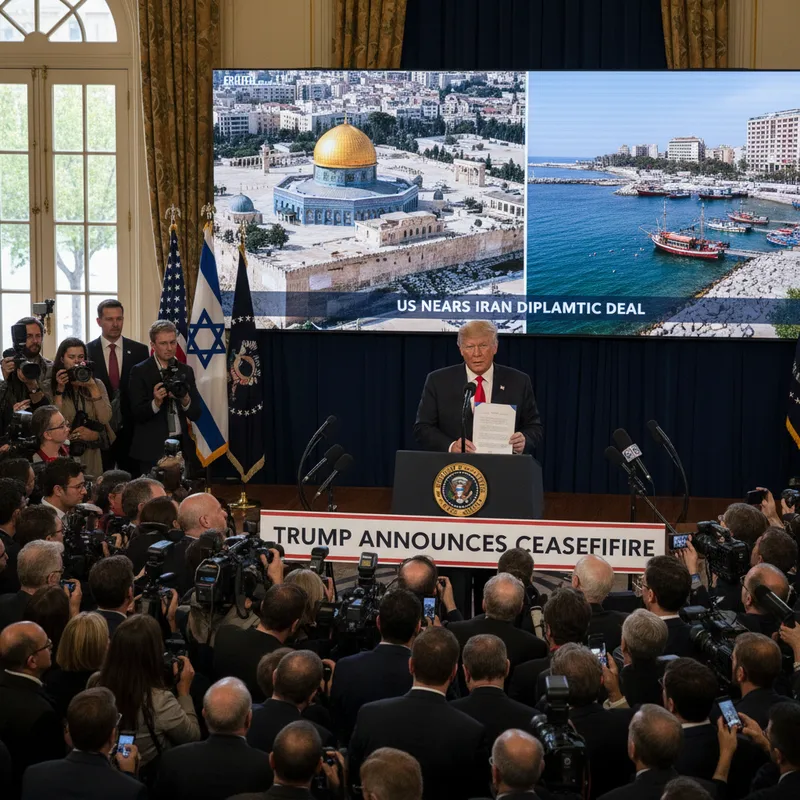
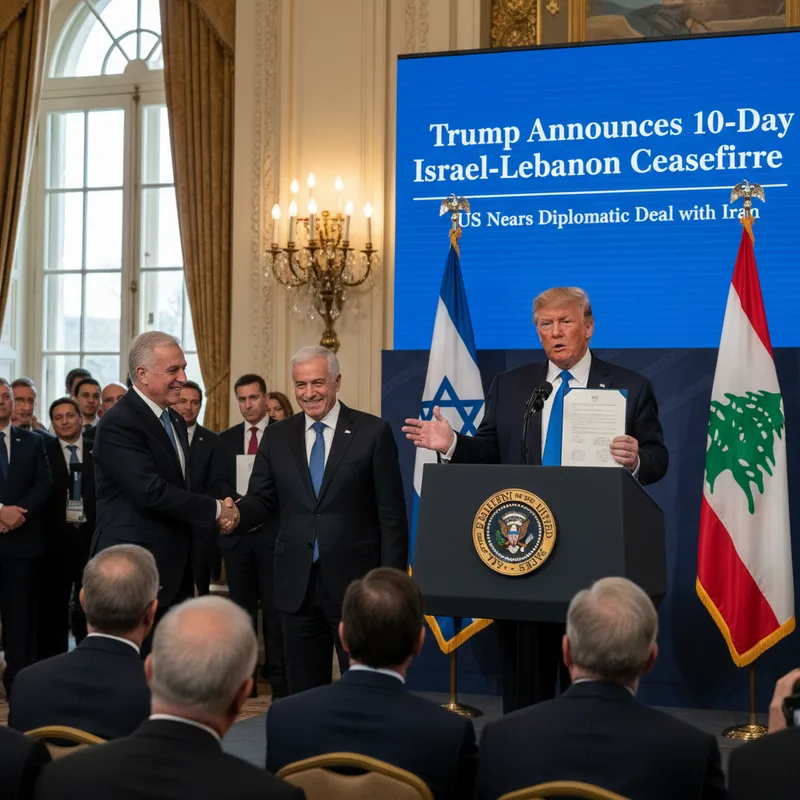
A fragile calm has settled on the Israel-Lebanon border as a 10-day ceasefire, announced by former President Donald Trump, took effect Friday. The temporary truce aims to halt the escalating cross-border attacks that have threatened to plunge the region into a wider conflict. The ceasefire appears to be holding in its initial hours, according to multiple international reports.
The announcement marks a significant, if temporary, diplomatic intervention spearheaded by the United States. Trump's statement also indicated that the U.S. is “close” to securing a separate deal with Iran, a key supporter of the Lebanese militant group Hezbollah. This development comes amid heightened tensions throughout the Middle East, with the security of vital shipping lanes and the specter of a broader war looming large.
For weeks, Israeli forces and Hezbollah militants have engaged in their most intense fighting since the 2006 Lebanon War. The clashes, which began as a response to the conflict in Gaza, have displaced tens of thousands of people on both sides of the border and raised fears of a full-scale war that could draw in regional and global powers.
A delicate diplomatic maneuver
The ceasefire represents a high-stakes diplomatic effort to de-escalate a volatile situation. While the specific terms of the 10-day truce have not been made public, such agreements typically involve a commitment from all parties to cease offensive military operations. The crucial test will be whether the calm can extend beyond the initial period, allowing for more substantive negotiations.
The U.S.-brokered deal is a reminder of the continued American influence in the region. Historically, the U.S. has been a key mediator in Middle East conflicts, though approaches have varied between administrations. The Trump administration's strategy often involves direct, top-level negotiations, a departure from more traditional diplomatic channels. This approach views economic pressure and transactional deal-making as central to foreign policy, a theme that has characterized the administration's priorities, which have sometimes included proposals to reduce federal spending in areas like healthcare while politicians unite against racist graffiti and increasing military budgets.
This diplomatic push occurs within a busy domestic political landscape. Washington remains focused on numerous issues, including key votes in the Senate, where lawmakers are returning to address important judicial nominations that could shape the nation's legal future for decades.
The Iranian connection
Crucially, the ceasefire in Lebanon is linked to the broader geopolitical standoff with Iran. Trump’s hint at an impending deal with Tehran has captured the attention of international observers. Iran is a major backer of Hezbollah, providing the group with financial and military support. Any lasting peace on the Israel-Lebanon border is likely contingent on the posture of Tehran.
In a related development, Iranian officials reported that the Strait of Hormuz remains “completely open” for the duration of the ceasefire. The strait is a critical chokepoint for global oil supplies, and threats to its closure by Iran have previously sent shockwaves through the world economy. The statement is seen as a conciliatory gesture, potentially paving the way for the broader agreement Trump alluded to.
A potential U.S.-Iran deal would have significant implications for national and global security. It follows years of heightened tensions after the Trump administration's 2018 withdrawal from the Joint Comprehensive Plan of Action (JCPOA), a landmark 2015 deal aimed at limiting Iran's nuclear program. Reaching a new understanding would be a monumental task, touching on nuclear activities, regional proxy forces, and economic sanctions that have impacted everything from geopolitics to American small business confidence due to inflation concerns.
Path forward remains uncertain
World leaders have cautiously welcomed the ceasefire, urging both Israel and Lebanon to exercise restraint and use the 10-day window to pursue a more permanent resolution. The United Nations has long maintained a peacekeeping force in southern Lebanon, tasked with monitoring the border and preventing hostilities under UN Security Council Resolution 1701, which helped end the 2006 war.
However, the deep-seated animosity and complex web of alliances in the region mean that the path to a lasting peace is fraught with challenges. Hezbollah's role as a powerful political and military force within Lebanon, independent of the state, complicates formal negotiations. The group's objectives are closely aligned with Iran's, not necessarily those of the Lebanese government.
For now, the pause in fighting brings a moment of relief for civilians who have borne the brunt of the recent violence. The coming days will be critical in determining whether this temporary truce can become a turning point toward stability or is merely a brief interlude before a return to conflict. The international community will be watching closely to see if diplomacy can prevail where military force has not.