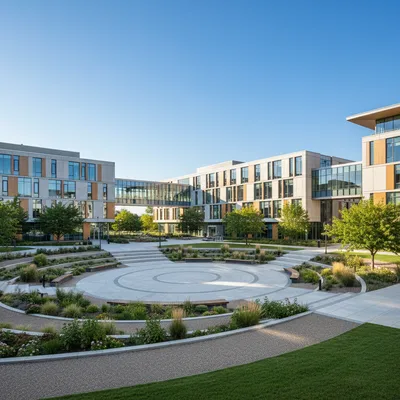
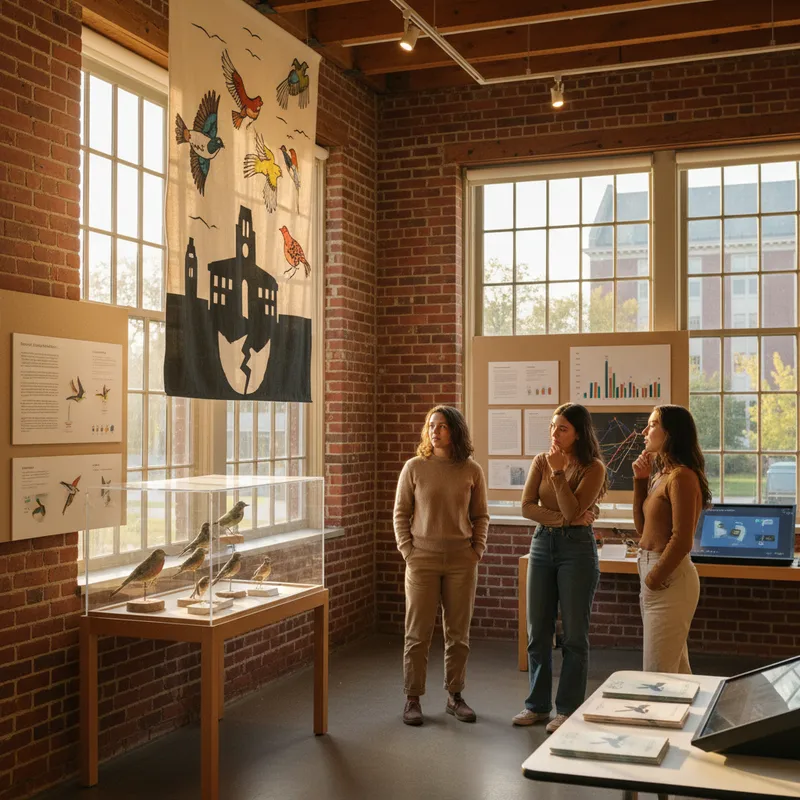
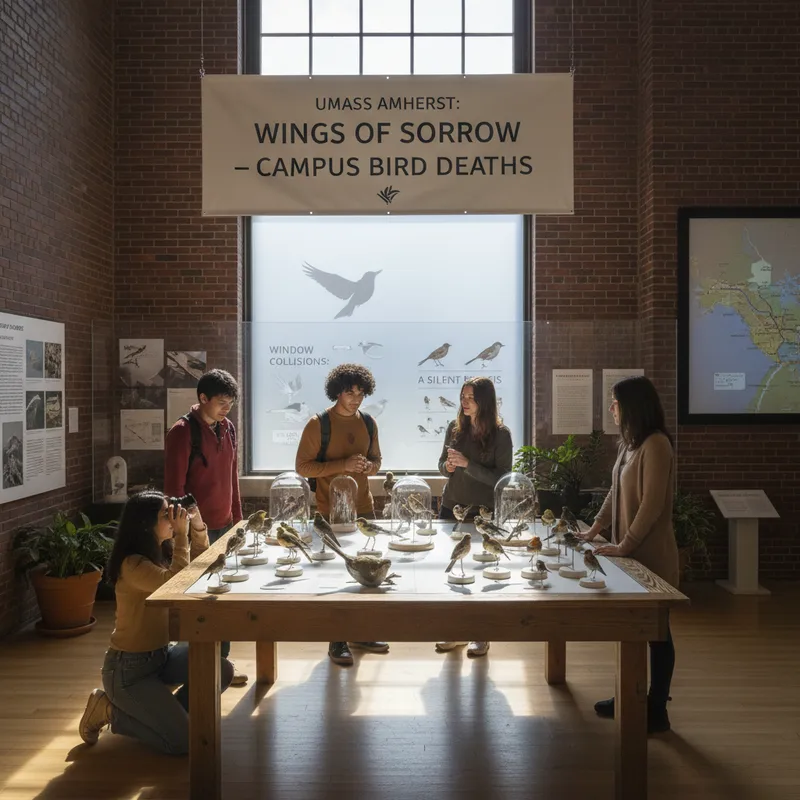
A new exhibit at the University of Massachusetts Amherst is casting a spotlight on a largely invisible tragedy: the death of birds from window collisions on campus. Titled "Reflecting on collisions," the display showcases the findings of the UMass Bird Window Collision Project, a student-led initiative to document and address avian mortality at the university.
Located in the Bromery Center for the Arts, the exhibit serves as a visual memorial and an educational tool, aiming to engage the university community on the significant, yet often overlooked, environmental hazard posed by modern architecture. While the university has not released official data on the number of birds killed, the project brings a sobering reality to light, displaying information and artifacts gathered by student researchers who have monitored campus buildings for casualties.
Bird-window collisions are one of the leading causes of avian death in the United States. According to the Cornell Lab of Ornithology, estimates suggest that up to one billion birds die each year in the U.S. from striking glass. The problem is particularly acute on university campuses, which often feature large, reflective glass buildings that confuse birds by reflecting the surrounding sky and trees or by appearing as a clear flight path, especially during migration seasons.
A history of student-led advocacy
The bird collision exhibit is the latest example in a long and storied history of student-led activism and research at UMass Amherst. For decades, students have organized to confront pressing social, political, and environmental issues, often using public exhibits to educate and mobilize the campus community. This tradition of student-curated displays transforming public spaces into forums for debate and reflection is a hallmark of the university’s culture.
Just last year, a student-curated exhibit titled "Be Revolutionary: UMass Student Solidarity with Central America in the 1980s" occupied the same lobby in the Bromery Center for the Arts. That display, created by students in a graduate history practicum, explored the university's vibrant anti-imperialist movement during the Reagan era.
During the 1980s, the U.S. government was funding military regimes and counter-revolutionary death squads in countries like El Salvador, Guatemala, and Nicaragua, leading to the deaths and disappearances of hundreds of thousands of civilians. In response, a powerful solidarity movement emerged across the United States, with UMass students playing a prominent role. They organized teach-ins, marched against U.S. foreign policy, and held building occupations to demand the university block CIA recruiters from campus.
From CIA protests to conservation efforts
The activism of the 1980s led to direct confrontations with the university administration and law enforcement, resulting in the arrest of dozens of students. In a landmark case, the arrested students, with the help of famed activist Abbie Hoffman, President Jimmy Carter's daughter Amy Carter, and historian Howard Zinn, argued a "political necessity defense." They successfully put the CIA's covert actions on trial, arguing their civil disobedience was necessary to prevent greater harm, and were ultimately acquitted.
The "Be Revolutionary" exhibit chronicled this dramatic chapter of campus history, showcasing the power of student organizing to challenge national policy. It featured archival materials and oral histories, creating a bridge between a past generation of activists and current students. By placing this history in a public venue, the student curators ensured that this legacy of dissent and engagement would not be forgotten.
While the subject matter has shifted from the political perils of foreign wars to the environmental impact of campus infrastructure, the underlying principle remains the same. The "Reflecting on collisions" exhibit continues this legacy, harnessing student research and passion to advocate for change. Where students once protested recruiters for intelligence agencies implicated in human rights abuses, they now challenge architectural designs that are deadly to wildlife.
The ongoing impact of campus exhibits
Public exhibits like these serve multiple functions within the university ecosystem. They are a powerful educational tool, translating academic research into an accessible format for a broad audience. They also act as a form of institutional critique, encouraging the university to live up to its values, whether by divesting from companies complicit in foreign conflicts or by adopting bird-safe building standards. In a similar vein, recent legislative action in Massachusetts, such as the bill passed by the state House to ban youth social media use, demonstrates a growing concern among policymakers regarding the impact of technology on young people.
For the students involved, the process of curating an exhibit is a profound learning experience, offering practical skills in research, design, and public communication. It empowers them to see themselves as creators of knowledge and agents of change. The UMass Bird Window Collision Project hopes its work will lead to concrete measures, such as the application of bird-safe film to existing windows and the inclusion of bird-friendly design in future construction projects.
The exhibit is a somber reminder of humanity’s impact on the natural world, but it is also a hopeful testament to the power of students to identify a problem and advocate for a solution. As migratory birds continue their seasonal journeys, the work being done at UMass aims to make their passage a safer one, continuing a proud tradition of campus activism that speaks to the conscience of the community.