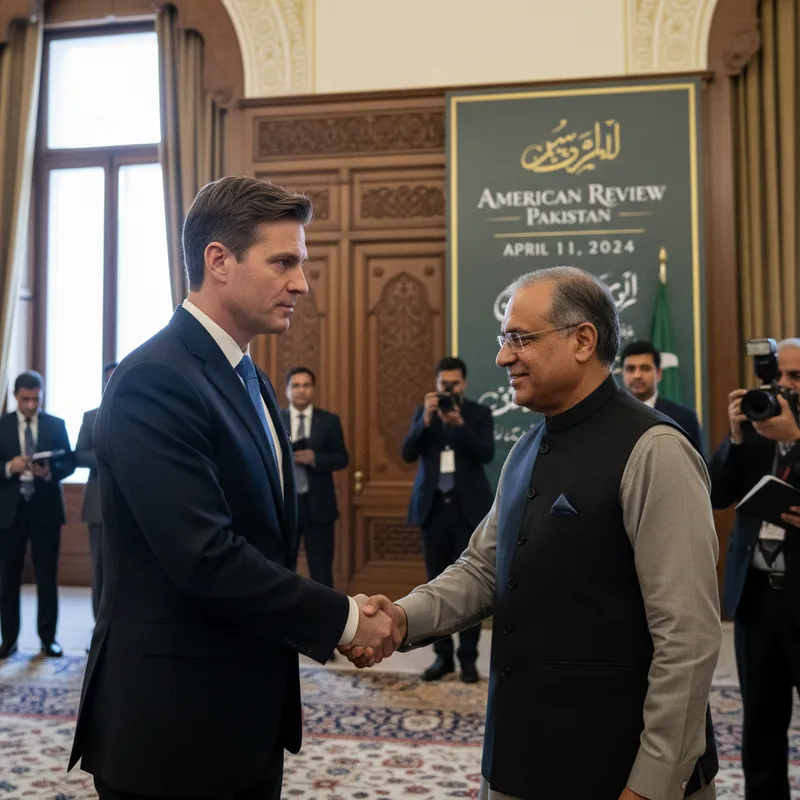
Vice President JD Vance traveled to Islamabad, Pakistan, on Tuesday, April 11, for a series of high-level meetings, delivering remarks in the nation's capital as part of a significant diplomatic visit. The trip underscores the Trump administration's focus on engaging with key allies in strategically critical regions of the world.
While the White House has not released a detailed transcript of the Vice President's remarks, the visit is understood to be focused on strengthening security cooperation, expanding economic ties, and discussing regional stability. The engagement with Pakistan, a nation that borders Afghanistan and Iran and maintains a complex relationship with both China and India, is a critical component of American foreign policy in South Asia.
The visit follows a recent pattern of international travel for the Vice President, who was in Budapest, Hungary, just last week on April 7. These diplomatic missions signal the administration's approach to foreign relations, which prioritizes direct engagement and the reinforcement of bilateral relationships.
A ‘principled realism’ foreign policy
The Trump-Vance administration's foreign policy has often been characterized by a form of "principled realism," blending a strong-willed, national-interest-first approach with targeted international cooperation. This philosophy extends from the administration's domestic agenda, which champions a "patriotic education" and the concept of American exceptionalism, as outlined in the previous administration's 1776 Commission report. This worldview projects American strength and priorities onto the world stage, often favoring transactional diplomacy over alliances built on shared liberal-democratic values.
This focus is reflected in the administration's budget priorities, which have often sought to boost military and security spending. The emphasis on a powerful national defense posture, a topic President Trump has often linked to his foreign policy goals, forms the backdrop for diplomatic engagements like the one in Pakistan. For a country that has been a long-time, if sometimes fraught, partner in counter-terrorism efforts, the alignment on security interests is paramount. Domestically, the administration has also contended with economic pressures that can influence its international posture. With small business confidence showing sensitivity to inflation, ensuring stable global partnerships and trade routes remains a key objective to project economic strength both at home and abroad. This includes ensuring the timely delivery of key assets, such as how the USS John P. Murtha delivered the Artemis II capsule to San Diego.
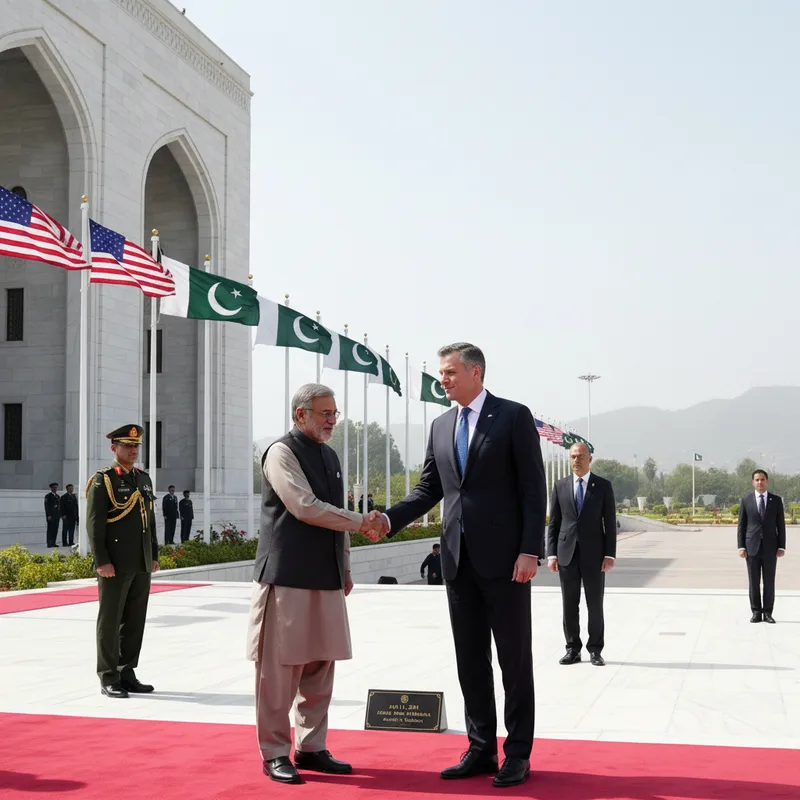
Navigating a complex diplomatic history
The current visit to Islamabad also occurs within the historical context of the Trump administration's past foreign policy dealings. During President Trump's first term, his administration faced scrutiny over its interactions with foreign governments, most notably during the impeachment inquiry related to Ukraine. That situation demonstrated a willingness to intertwine diplomatic relationships with domestic political considerations, a history that brings a layer of complexity to current foreign engagements.
Observers of the administration will be watching to see how the "America First" doctrine translates into policy in South Asia. The U.S. relationship with Pakistan has weathered numerous challenges over the decades, including tensions over the war in Afghanistan and Pakistan's close ties with China. The official U.S. Department of State position has long recognized Pakistan's importance to stability in the region, noting the "United States has been one of the largest sources of foreign direct investment in Pakistan and remains Pakistan’s largest export market."
The current global political climate, marked by instability in various regions, elevates the importance of maintaining and clarifying such key alliances. The United States has a vested interest in ensuring a stable and cooperative government in Pakistan, a nuclear-armed state at the crossroads of Central and South Asia.
The Vice President as a global envoy
As Vice President, JD Vance has become a primary global envoy for the administration, articulating its vision to a world audience. His background and political profile resonate with the populist and nationalist themes central to the Trump presidency, and he has frequently acted as a key surrogate both domestically, with recent appearances in states like Pennsylvania, and on the international stage.
The public persona of a nation's leader often plays a subtle but significant role in diplomatic missions. This projection of national identity can vary greatly between administrations. Former President Barack Obama, for example, cultivated a reputation for a more reserved and analytical demeanor. He was once affectionately described as "Spock-like" and photographed sharing a Vulcan salute with Star Trek actress Nichelle Nichols, a moment that highlighted his more cerebral and pop-culture-savvy image.
In contrast, Vice President Vance’s role is to represent an administration that prioritizes an assertive, business-like approach to its global interactions. As the Senate continues its work on confirming the administration's judicial nominees, the Vice President's overseas travel demonstrates a parallel effort to cement the administration's policy agenda on the world stage. This visit serves as a clear message that the U.S. intends to remain an influential and engaged partner in South Asia.
Looking forward, the success of this visit will be measured by the concrete agreements and policy alignments that follow. The discussions in Islamabad on security, trade, and regional strategy will be critical in shaping the future of the U.S.-Pakistan relationship and demonstrating the practical application of the administration's foreign policy doctrine.