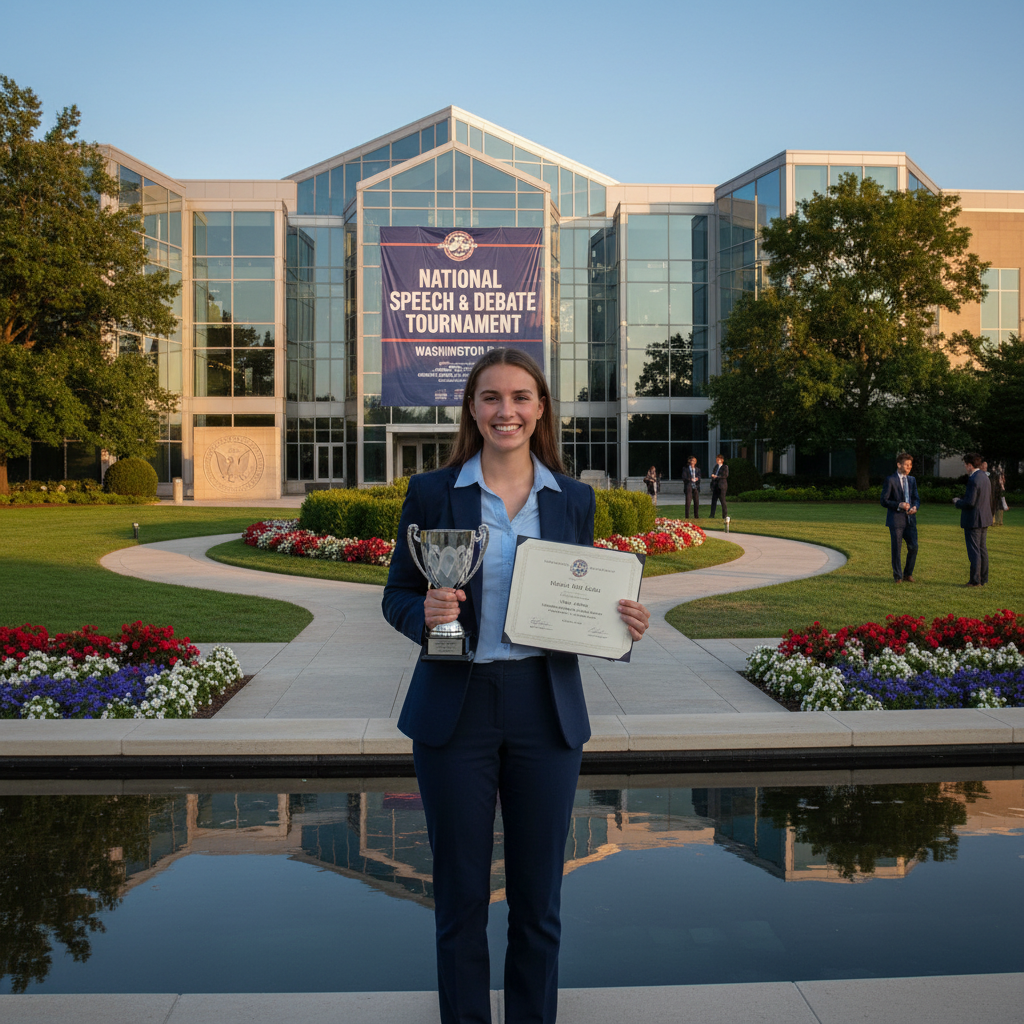
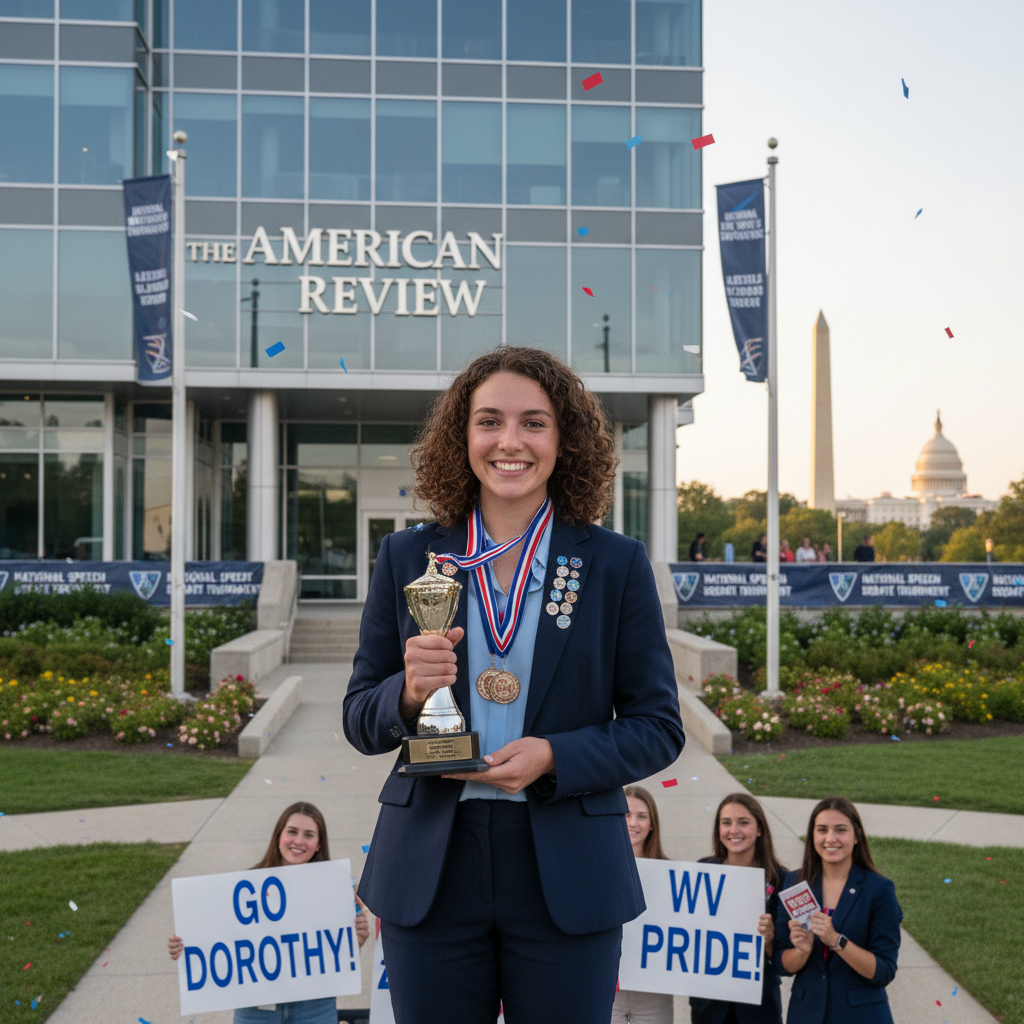
A West Virginia high school student has achieved national recognition at one of the country's most prestigious academic competitions, placing seventh out of 193 participants from across the nation in the speech and debate NCFL Grand National Tournament in Washington D.C.
Dorothy Clark, 17, an incoming senior and speech and debate team captain at Parkersburg High School in Vienna, West Virginia, earned the high honor over Memorial Day weekend. The event, hosted by the National Catholic Forensics League (NCFL), brings together the best high school orators and debaters for a weekend of intense competition, representing a significant milestone for students in the academically rigorous extracurricular.
Speech and debate programs have long been a fixture of American high schools, providing a training ground for future leaders in law, government, and business. The competitions demand a high level of research, critical thinking, and public speaking prowess. For Clark, who will serve as her team's president for the second consecutive year, the activity's value extends far beyond the competitive circuit.
A 'jack-of-all-trades' skill
Clark describes the skills learned in speech and debate as a “jack-of-all-trades,” applicable to any future career path. As team captain, she has embraced the role of a mentor, helping her peers build their own skills and self-assurance.
It was absolutely crazy, but it was amazing and we compete everywhere and I just love it. It’s very community-based and academic and everyone’s super friendly with each other and it’s amazing.
“My role is to help guide students towards being their best selves on the team, and that entails helping them become more confident in themselves,” she said. The experience of crafting arguments, delivering speeches, and thinking on one's feet provides a foundation that is increasingly seen as critical for success after graduation.
As parents and educators nationwide debate the role of extracurriculars in college admissions, activities like speech and debate are often highlighted for their direct correlation with academic and professional skills. In fact, Los Angeles Unified celebrates student success as the school year ends. “No matter what you plan to do in life, no matter what, speech and debate is going to help you,” Clark said.
From stage roles to state honors
Clark’s dedication to performance is not limited to oratory. She is a committed member of Thespian Troupe #264, where she has taken on roles ranging from Snoopy in “You’re a Good Man Charlie Brown” to a part in a production of “Mean Girls.” Her theatrical talents have also earned her individual accolades.
At a state-level competition at West Virginia University's Performing Art Center, she received an “Outstanding Contrasting Monologues” award and was invited to perform for all the other thespian troupes in West Virginia. This passion for theater, she would soon discover, had unexpected benefits for her other ambitions.
The surprising link between theater and zoology
While her success in the arts is notable, Clark’s primary career aspiration lies in science. She plans to become a zoologist, a goal that might seem worlds away from a debate podium or a theater stage. Yet, it was her performance background that gave her a crucial edge in securing a highly sought-after internship.
Clark is in her second summer as an intern in the ZooAide program at the Columbus Zoo and Aquarium, a position she earned in part because of her communication skills. During her interview, she was told that her experience in theater was a significant asset. “It was actually the thing that pushed me ahead of all the applicants,” she said, noting that the interviewer praised theater students for being “excellent when it came to speaking to the public at the zoo.”
Her role involves educating visitors about the animals and the zoo's conservation partnerships, such as its work with the Manatee Rescue and Rehabilitation program. The internship requires a significant commitment; Clark and her mother travel two hours from their home in Vienna for her shifts. For Clark, the experience is profoundly rewarding.
Future plans and community ties
Despite her national achievements and worldly ambitions, Clark remains deeply connected to her hometown. She speaks fondly of the Mid-Ohio Valley, praising the strong sense of community and the natural environment. An “outdoorsy girl,” she spends much of her free time in the forest behind her house.
Looking ahead to her senior year, Clark aims to maintain her high standards. “I’m not too worried about doing anything extravagant for my final year in high school, I want to make sure I go out as strongly as I came in,” she said. “I just want to remain the best student I can be.”
Her long-term academic plan includes majoring in zoology or animal behavior science, with the ultimate goal of earning a doctorate in environmental education. “The thing I care about most are the animals and the conservation aspect, so wherever I end up, whether that be in Columbus or Louisiana or California, as long as I’m with the animals, I’m not sure I care much where I end up,” Clark stated.
She balances her intensive academic and extracurricular schedule with ballet, volunteering at her local church, reading, and caring for her two dogs. For over a decade, dance has been a source of artistic expression, particularly ballet, which she calls a “beautiful art form.”
As she prepares for her final year of high school in a nation where elite secondary schools are often in the spotlight, Clark's story is a testament to the diverse paths to success available to motivated students. Her journey from a small town in West Virginia to a national stage in Washington D.C., and from the theater to the zoo, demonstrates how a combination of varied passions can forge a uniquely powerful skill set for the future. Her plans remain flexible, but her focus is clear.
“A lot of places offer different things … but again, I’m still kind of trying to figure everything out the best I can,” she said.