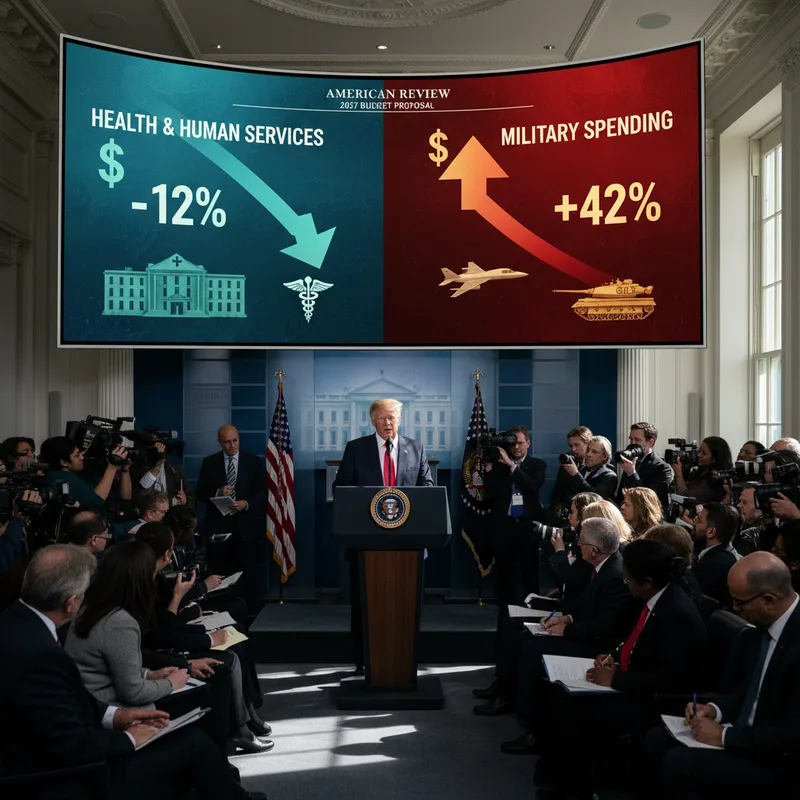
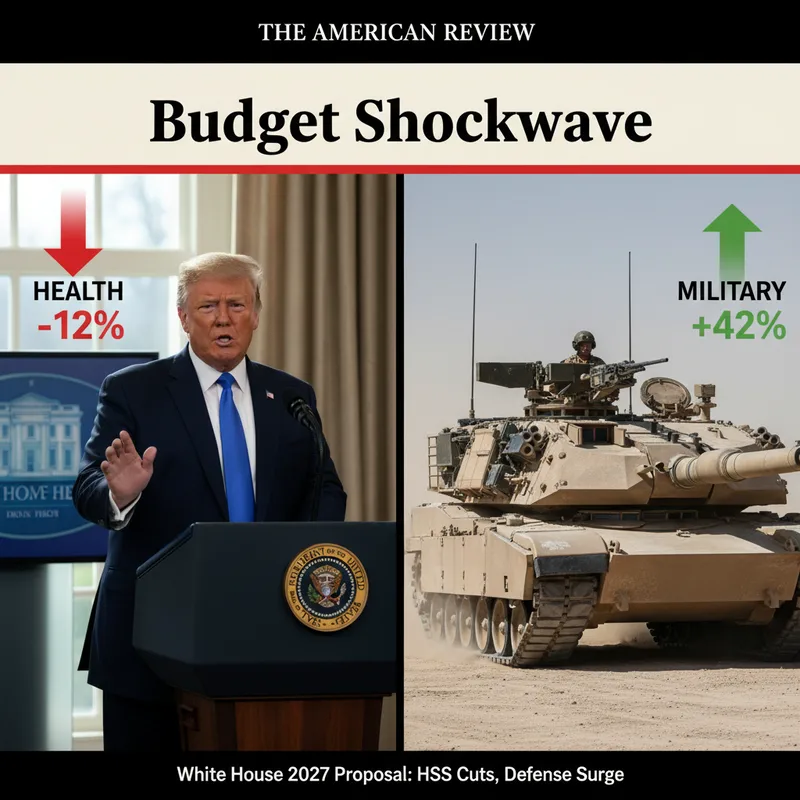
President Donald Trump's administration last week proposed a 2027 budget that starkly redefines the nation's priorities, calling for a dramatic increase in military spending funded by significant cuts to healthcare and other non-defense programs. The proposal would slash the Department of Health and Human Services (HHS) budget by $15 billion, a 12% reduction from the current year, while allocating an unprecedented $1.5 trillion to the military, a 42% increase.
The proposed cuts to health funding arrive against a grim backdrop. The United States currently has a much higher rate of deaths from avoidable causes than most other industrialized nations. Americans die from treatable conditions at nearly double the rate of people in Spain, France, Japan, and Australia. Data shows that Americans are the most likely among their peers in affluent countries to skip a doctor’s appointment, avoid a recommended medical test, or skimp on prescription drugs due to cost.
This is not a new direction for the administration. The proposed cuts compound those made in last year’s "big, beautiful bill" (BBB), which carved out more than $1 trillion over a decade from Medicaid and the Affordable Care Act marketplaces. According to an analysis by the Center on Budget and Policy Priorities, those changes, largely imposing stringent work requirements, are projected to cause 15 million Americans to lose their health insurance.
Healthcare and social safety net face deep cuts
The administration's budget signals a clear belief that social services are a state, not federal, responsibility. This philosophy extends beyond healthcare to other areas of the social safety net. For example, the U.S. lags behind many developed nations in public spending on early childhood education and care, a factor contributing to lower labor force participation among American women.
It’s not possible for us to take care of daycare, Medicaid, Medicare, all these individual things, they can do it on a state basis. All these little scams you have to let states take care of them.
The President's words, spoken at a White House Easter reception, were captured on video and briefly posted to the White House's YouTube page before being deleted. The remarks, however, continue to circulate online and are expected to feature heavily in Democratic attack ads heading into the midterm elections.
The White House has defended the budget reductions by alleging corruption and inefficiency. A spokesperson said it cut $4 billion from a program providing electricity access for low-income households because benefits were being sent to deceased individuals, among other fraudulent activities. It also stripped $5 billion from the National Institutes of Health, claiming the agency "broke the trust of the American people with wasteful spending, misleading information, risky research, and the promotion of dangerous ideologies that undermine public health."
'Hard power' and beautification projects take priority
While social programs face the axe, the budget proposal lavishes funding on what the President calls 'hard power.' The $1.5 trillion military budget for 2027, which is roughly three times Iran's entire GDP, reflects a focus on global military strength. “We have to take care of one thing: military protection. We have to guard the country,” Trump said at an Easter lunch reception last week. This spending surge follows a costly conflict; by some estimates, the war against Iran cost the U.S. $12.7 billion in its first six days and $28 billion in just over five weeks. Meanwhile, the USS John P. Murtha delivered a crucial component of the Artemis program to San Diego, showcasing the nation's investment in both defense and space exploration. The proposed increases to defense are so large that the cuts to the entire non-defense budget are not enough to cover them, suggesting further cuts to the safety net may be on the horizon to balance the books, especially given the administration's opposition to raising taxes.
Alongside military might, the budget carves out $10 billion for a new "Presidential Capital Stewardship Program" aimed at beautifying Washington, D.C. The fund, to be overseen by the National Park Service, is intended to renovate parks and aging infrastructure. A White House document states the goal is to make the capital "safe, clean, and beautiful again" so that "Americans can once again be proud of the Nation’s capital."
Controversy over
vanity projects and political risk
The D.C. beautification fund has drawn criticism from some lawmakers who worry it could be used as a slush fund for presidential vanity projects. Trump has already faced legal challenges for his architectural ambitions in the capital, including a controversial plan to erect a 250-foot-tall, white-and-gilded triumphal arch on the National Mall. Other contentious projects include bulldozing a public golf course and the partial demolition of the White House's East Wing to construct a $400 million luxury ballroom.
This focus on military and aesthetic spending comes at the expense of programs for working-class Americans, the very voters who propelled Trump to the presidency. The administration's first major legislative achievement, the BBB, delivered a $4.5 trillion tax cut over ten years, which the Congressional Budget Office found would boost the after-tax income of the richest 10% of households by an average of $13,622.
For many average Americans, who may be struggling with inflation concerns and rising healthcare costs, the budget's priorities may feel like a betrayal. The data suggests a potential political peril for the president. While he focuses on grand projects and military power, a growing number of his voters are facing shorter lifespans due to treatable illnesses. The budget confirms that this commitment has been forgotten, a reality that could impact his standing in future elections.
While the administration claims it is rooting out waste, the proposed budget presents a clear choice: a vastly expanded military and a revitalized capital city over federally supported healthcare and social services. As the budget debate proceeds through Congress, the political consequences of that choice will become increasingly apparent.