

For 80 years, a foundational US strategy for federally funded research has propelled major advancements, from the internet and space travel to life-saving vaccines and cancer treatments. But experts now warn this once-revolutionary model is outdated, distorted by market forces, and failing to address some of the nation’s most pressing health crises, including mental illness.
The current approach largely follows the "linear" framework presented to President Harry S. Truman in a 1945 report by science adviser Vannevar Bush. Under this model, the government funds basic research, which academia develops and private companies then translate into commercial products. While this system has fueled decades of growth and been copied globally, its focus on market-driven outcomes is creating significant gaps in medical innovation.
A new analysis published in the journal Nature argues that the private sector’s emphasis on minimizing risk and maximizing profit is skewing research priorities. Companies are increasingly focused on diseases like cancer and rare conditions, which command high drug prices and benefit from accelerated FDA approval pathways. In 2022, more than half of all new drugs approved by the US Food and Drug Administration (FDA) were for these areas.
A system struggling to keep up
This market focus comes at the expense of other critical areas. Despite more than one in five American adults living with mental illness in 2022, new psychiatric therapies accounted for only 4.8% of FDA approvals between 2018 and 2022. The authors of the Nature analysis suggest developers are deterred by the limited understanding of complex mental health conditions and the high failure rate of clinical trials, which drives up costs and uncertainty.
The report also highlights how a market-driven approach encourages pharmaceutical companies to prolong monopolies on their drugs through minor changes in formulation and patents, limiting competition from more affordable generic versions. This practice contributed to an average price increase of 68% for the 12 best-selling drugs in the United States between 2012 and 2019, straining healthcare budgets and patient access.
Addressing major societal health challenges like chronic disease, mental wellness, and health security requires a long-term, multidisciplinary strategy that typical four-to-five-year government grants cannot support. As technology accelerates, with advances in artificial intelligence and big data enabling more personalized medicine, the need for reform has become urgent.
Define a clear mission
The authors propose a new mission-based strategic framework for US biomedical innovation, built on three pillars: a clear mission, an aligned regulatory and incentive structure, and expanded public-private partnerships. This approach draws inspiration from past national triumphs, such as the Apollo space program, the Human Genome Project, and the rapid development of COVID-19 vaccines under Operation Warp Speed.
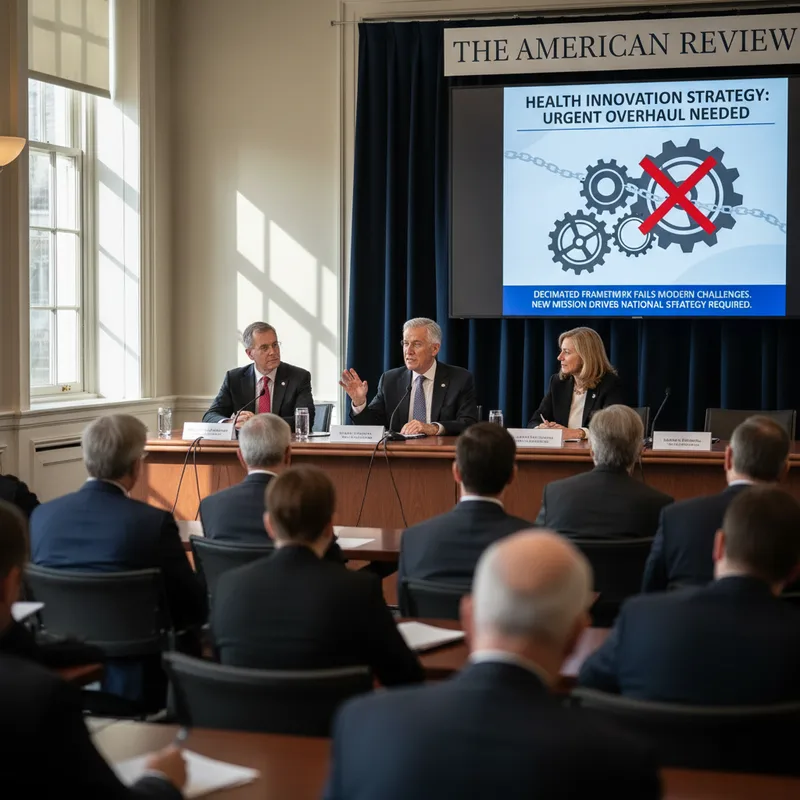
Unlike the current fragmented system, a national vision would set clear, goal-oriented missions tied to pressing societal needs. The United States lags behind other nations in this regard. Countries like Singapore, China, the United Kingdom, and the European Union have established long-term national research strategies, setting measurable goals and priorities for public and private collaboration. A new festival launched by Massachusetts brewers shows how new ventures can be organized, even in different sectors.
To achieve this, the authors endorse a recent recommendation from the US National Academy of Medicine to establish a presidential and congressional advisory body. This group, comprised of experts from academia, industry, economics, and government, would be tasked with developing a strategic national vision. With a proposed seven-to-ten-year charter to ensure continuity beyond election cycles, the body would use data-driven assessments to identify disease burdens, unmet medical needs, and research gaps where market investment is low.
This mission-based strategy would augment, not replace, curiosity-driven science. By activating funding across government, philanthropy, and industry, it would help de-risk crucial research areas that the market alone has failed to advance, creating new opportunities for collaboration. It would also connect to existing federal efforts like the Cancer Moonshot initiative.
Aligning incentives with public need
Once a mission is defined, a modern regulatory and governance framework is needed to balance safety with progress. As technologies like AI and digital health evolve, regulations must be adaptive, ensuring ethical integrity and data security without stifling innovation. This requires coordinated action by federal agencies, funders, and regulators to align incentives with public value rather than purely commercial returns.
A key proposal is the development of a standardized framework for assessing the "societal return on investment" for health research, similar to models used in defense and energy planning. Led by the White House Office of Science and Technology Policy, this would allow for a more holistic evaluation of a potential innovation’s long-term health, economic, and population impacts. Furthermore, the federal government could leverage its immense purchasing power to create stable markets for high-priority health products. These could include next-generation vaccines and antimicrobial agents, advanced diagnostics, secure health-data infrastructure, and resilient domestic manufacturing for essential medicines. By guaranteeing demand, the government can spur sustained private investment in areas crucial for national health security but currently deemed too risky. Discussions around national security often involve the state of the economy, with Los Angeles schools bracing for a massive strike serving as a local example of potential disruptions.
Health innovation as national security
A robust and innovative health sector is a cornerstone of national security. The COVID-19 pandemic starkly illustrated how a public health crisis can disrupt society, cripple the economy, and strain national resources. A proactive, mission-driven approach to biomedical research would bolster the nation's resilience against future biological threats, whether they emerge naturally or are man-made.
The current National Security Strategy identifies great power competition as a major focus, but a nation’s strength is fundamentally tied to the health and well-being of its population. Investing in domestic manufacturing for essential medicines, for example, reduces reliance on foreign supply chains that can be disrupted during a crisis. Ensuring the health of the populace is as critical as any military or defense strategy, a point often debated by lawmakers in Washington when budget priorities are decided. Issues like this will be on the table when the Senate returns to business.
By rebalancing public needs with market incentives, this proposed strategy aims to ensure that the fruits of taxpayer-funded research translate into tangible benefits for all Americans. The long-term vision is a more equitable and effective health innovation ecosystem, one capable of tackling the complex challenges of the twenty-first century and building a healthier, more secure nation.